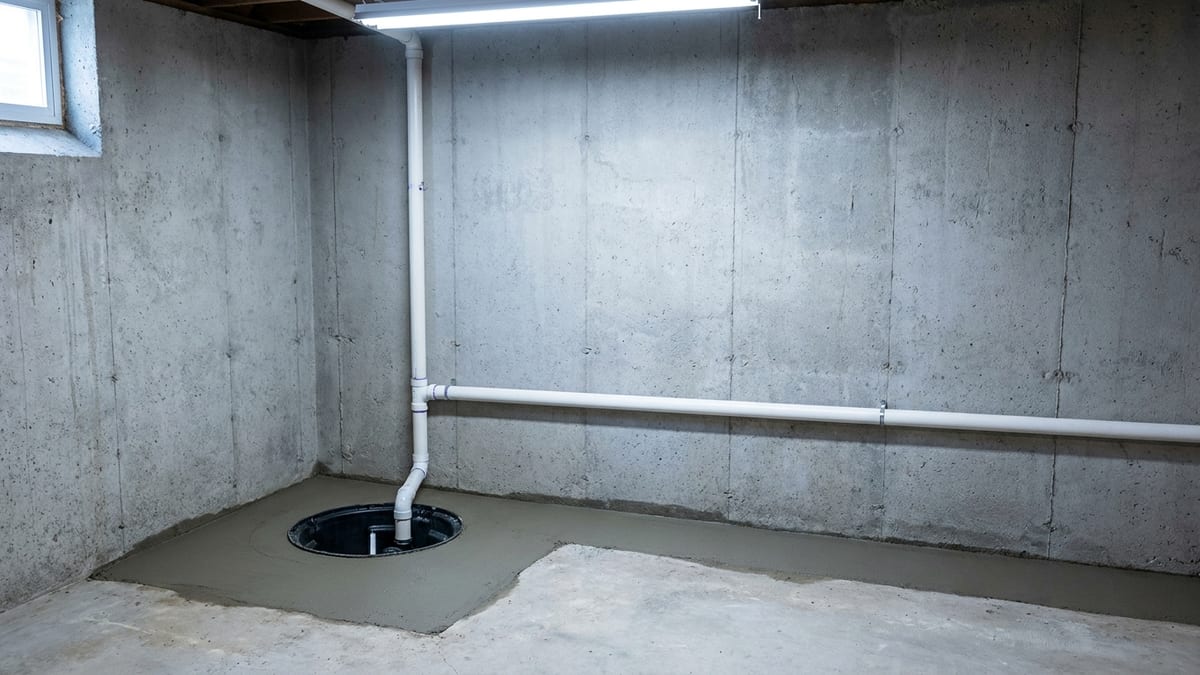
A homeowner calls on a Tuesday in April with three inches of water in the basement. One contractor sells a $1,100 pump replacement and leaves. Another walks the perimeter, finds water coming through the cove joint on two walls, and sells an $11,000 interior drain tile system with a new basin, a primary pump, and a battery backup.
Same lead. Same house. Ten times the ticket.
That gap is the entire game in sump pump and interior drainage lead generation. Most waterproofing companies do not lose money on bad leads. They lose money by treating a system opportunity like a service call, and by paying system-level lead prices for pump-swap volume. Here is the ticket math, the channel math, and the campaign split that books both.
Why do wet basement leads split into two different buyers?
They are two different purchases with two different triggers, and they behave nothing alike once the phone rings.
The water-on-the-floor buyer
This homeowner has standing water right now. A pump failed, a discharge line froze, a storm dumped four inches overnight, or the power went out and there was no battery backup. They are searching on their phone from the basement stairs, calling three companies in a row, and booking whoever can be there first.
Ticket: $600 to $3,000 for a pump, basin, or backup. Sales cycle: hours. Close rate on an exclusive lead that gets a fast answer: 30 to 40 percent, because the decision is small and the pain is immediate.
This is a speed game. It only works if someone answers every call, a truck can be dispatched same day, and your inspector is trained to look past the pump at the walls. Half of these calls are system jobs wearing a pump-call costume.
The planned drainage buyer
This homeowner has lived with a damp basement for three, five, ten years. Musty smell. Efflorescence on the block. A dehumidifier running nonstop. Nothing has flooded lately, but they are finishing the basement, selling the house, or finally tired of the smell.
Ticket: $6,000 to $20,000 for interior drain tile, a new sump system, vapor barrier, and sometimes wall repair. Sales cycle: an inspection in the first week, a signed contract at or shortly after that appointment. Close rate on a well-worked exclusive lead: 20 to 30 percent.
This buyer is almost never searching when the campaign first reaches them. They are scrolling, and a photo of a finished perimeter drain and a dry basement stops them. That is why campaigns built for them look nothing like the ones built for the emergency call, and why our waterproofing lead generation page treats them as two separate systems with separate budgets.
What is a sump pump or interior drainage job actually worth in 2026?
You cannot set a lead ceiling until you know your real ticket mix. Access, depth, block versus poured wall, and discharge routing move these numbers, but the ranges are typical.
| Scope of work | Typical installed price | Buyer type |
|---|---|---|
| Scope of workSump pump replacement in existing basin | Typical installed price$600-$1,600 | Buyer typeEmergency |
| Scope of workNew basin, pump, and discharge line | Typical installed price$1,200-$3,000 | Buyer typeEmergency or planned |
| Scope of workBattery backup pump add-on | Typical installed price$800-$2,000 | Buyer typeAdd-on |
| Scope of workDischarge line repair, extension, or freeze guard | Typical installed price$300-$1,200 | Buyer typeEmergency |
| Scope of workPartial interior drain tile (one or two walls) | Typical installed price$3,000-$7,500 | Buyer typePlanned |
| Scope of workFull perimeter interior drain tile with new sump system | Typical installed price$7,000-$15,000 | Buyer typePlanned |
| Scope of workFull system with vapor barrier and wall treatment | Typical installed price$10,000-$20,000 | Buyer typePlanned |
| Scope of workExterior excavation and membrane | Typical installed price$15,000-$30,000+ | Buyer typePlanned / forced |
The pattern matters more than any single line. Converting one emergency call into a full perimeter system is worth more than eight pump swaps, and it costs you two crew days instead of eight truck rolls.
The formula that sets your lead ceiling
Run this per campaign, not per company.
Max cost per lead = (average job value x gross margin x close rate) / 3
Pump and backup campaign: $1,400 x 0.45 margin x 0.35 close = $220, divided by 3 = a $73 maximum cost per lead.
Full system campaign: $9,000 x 0.40 margin x 0.25 close = $900, divided by 3 = a $300 maximum cost per lead.
Those are not close. Hold one blended campaign to $73 and you will never win the planning-phase homeowner. Hold it to $300 and you will lose money on every pump swap that comes through the door. That single number is why the campaigns get split.
Why is cost per lead the wrong number for waterproofing contractors?
Because the invoice price ignores how many other companies got handed the same wet basement. Cost per acquired job is what pays a crew and a dig-out laborer.
| Channel | Cost per lead | Typical close rate | Cost per acquired job |
|---|---|---|---|
| ChannelReferrals and past customers | Cost per lead$0 | Typical close rate40-60% | Cost per acquired jobNear $0 |
| ChannelGoogle Business Profile / organic | Cost per lead$0-50 | Typical close rate20-40% | Cost per acquired job$100-250 |
| ChannelShared marketplace leads | Cost per lead$30-90 | Typical close rate5-12% | Cost per acquired job$350-1,400 |
| ChannelLocal Services Ads | Cost per lead$35-110 | Typical close rate15-30% | Cost per acquired job$200-600 |
| ChannelMeta advertising | Cost per lead$25-110 | Typical close rate10-20% | Cost per acquired job$250-1,100 |
| ChannelExclusive leads (performance partner) | Cost per lead$50-200 | Typical close rate20-38% | Cost per acquired job$200-900 |
| ChannelExclusive booked inspections | Cost per lead$200-400 | Typical close rate25-40% | Cost per acquired job$600-1,400 |
A $45 shared lead closing at 8 percent costs $563 per job, and the job you win is usually the cheapest bid on a pump. A $120 exclusive lead closing at 30 percent costs $400 per job, and the ticket is bigger because you are not one of four inspectors racing to the bottom on the same basement. The full math behind that is in our breakdown of exclusive vs. shared leads.
There is a second cost nobody tracks in waterproofing: inspection time. A proper basement inspection with a moisture read, a perimeter walk, photos, and a written scope is 60 to 90 minutes plus travel. At an 8 percent close rate you are running twelve inspections to sell one job. Price that at your inspector's loaded hourly cost and shared leads stop looking cheap.
How do you win the emergency sump pump call?
Speed, and nothing else. A homeowner standing in water has a two-hour attention span. If your first contact is a voicemail and a callback tomorrow, you are calling somebody who already has a truck in the driveway.
Three things decide this channel:
- Every call answered, including after hours. Storm water does not arrive during business hours. If your team cannot cover nights and weekends, an answering service that books an inspection beats a voicemail box every time.
- Same-day or next-morning dispatch. The promise in the ad and the promise on the phone have to match what the schedule can actually do.
- Under five minutes on every form fill. Response time is the single biggest lever on close rate in every trade we run, and the speed to lead math is brutal in waterproofing specifically because the problem is visible and urgent.
If the emergency side of your business is running well and the system side is empty, the fix is not a better phone script. It is a second campaign aimed at a completely different homeowner.
Want the system side built properly? Get started with Minyona and we will map the two campaigns, the two budgets, and the two cost-per-lead ceilings against your actual ticket mix.
How do you reach the planned drainage buyer before they search?
The $12,000 system job does not start with a search box. It starts with a homeowner who has stopped noticing the smell, scrolling past a photo of a clean, dry basement with a finished perimeter and a new basin.
What works in those campaigns:
- Real finished-job photography. Before and after from the same corner. The cove joint before, the drain tile and fresh concrete patch after. Stock basement photos convert badly because homeowners can tell.
- Symptom hooks, not product names. Nobody searches "interior drain tile." They recognize "white chalky residue on the block wall," "musty smell that never leaves," and "water line on the boxes in the corner."
- Trigger targeting. Recent home purchases, homes over 40 years old, and homeowners in the middle of a basement finishing project are all buyers who are about to spend.
- Free inspection framing that is honest. An on-site inspection is a sales appointment. Say the inspector will walk the perimeter and give a written scope and price. Do not imply nobody will try to sell them anything.
This is a demand-generation play, and it takes a few weeks to stabilize. It also produces the tickets that make a waterproofing company profitable instead of busy.
What does the seasonal calendar look like?
Waterproofing demand is weather-driven, which means the budget should be too.
| Period | What drives calls | Where the budget goes |
|---|---|---|
| PeriodLate winter thaw | What drives callsSnowmelt, saturated soil, frozen discharge lines | Where the budget goesEmergency capture, backup pump offers |
| PeriodSpring rains | What drives callsPeak flooding, pump failures | Where the budget goesMax emergency spend, full crews |
| PeriodSummer | What drives callsBasement finishing projects, home sales | Where the budget goesSystem campaigns on Meta |
| PeriodEarly fall | What drives callsPre-winter prep, inspection offers | Where the budget goesSystem campaigns, backup pump upsells |
| PeriodDeep winter | What drives callsSlowest period in cold markets | Where the budget goesBuild pipeline cheap, book spring installs |
The mistake is cutting spend in the slow months and then trying to buy your way into a busy spring at auction prices. Lead costs rise when every waterproofer in the market turns campaigns on the same week the rain starts. Building pipeline in the quiet stretch is the cheaper version of the same revenue, which is the core argument in our guide on setting a contractor marketing budget.
How many leads do you need to hit a revenue target?
Work backward from the number, not forward from the budget.
Target: $400,000 in added system revenue.
- Average system ticket: $8,000. That is 50 jobs.
- Close rate on exclusive leads: 25 percent. That is 200 leads a year.
- Monthly volume: roughly 17 leads a month.
- At $110 per exclusive lead, that is about $1,870 a month in lead cost.
- Cost per acquired job: $440 on an $8,000 ticket, or 5.5 percent of revenue.
Now run the same $400,000 on the pump side. At a $1,400 average ticket you need 286 jobs. At a 35 percent close rate that is 817 leads a year, roughly 68 a month. Same revenue, four times the lead volume, four times the dispatch load, and far more truck time. That is the argument for making the system campaign the priority and letting the emergency channel feed it.
If you want to run your own numbers against your current source, the ROI calculator does the cost-per-acquired-job math in about two minutes.
What should you do first?
Three moves, in order.
- Pull your last 50 wet-basement leads and tag each one pump versus system. You will probably find system jobs that were quoted as pump swaps. That is revenue you already paid for and gave away.
- Split the campaigns and set two separate lead ceilings using the formula above. One budget for speed capture, one for planning-phase demand.
- Fix the first five minutes before you buy another lead. Nothing in waterproofing survives a slow callback.
Exclusive leads, delivered to one contractor, running through your own Meta ad account so the brand homeowners remember is yours. Book a call and we will show you the live numbers for waterproofing in your market.
Frequently asked questions
How much do sump pump and interior drainage leads cost in 2026?
Shared marketplace waterproofing leads typically run $30 to $90 each but close at 5 to 12 percent because three to five companies get the same homeowner. Exclusive waterproofing leads generally run $50 to $200 and close at 20 to 38 percent. Local Services Ads for emergency pump calls usually land between $35 and $110 per lead with high intent but limited volume.
Should sump pump work and full interior drainage be separate campaigns?
Yes. A $1,200 pump replacement and a $10,000 interior drain tile system have different tickets, different close windows, and different maximum costs per lead. Blending them forces you to judge a five-figure system job by the economics of a one-hour pump swap, so run them as separate campaigns with separate budgets and separate cost-per-lead ceilings.
How fast do you have to call a wet basement lead?
Within five minutes for the emergency side. A homeowner standing in water is calling three companies in a row and booking whoever can get an inspector out first, so a callback the next morning is usually a callback to somebody who already signed. Planned system leads tolerate more time but still convert best when the first contact happens the same business day.
How many waterproofing leads do I need to add $400,000 in revenue?
At an $8,000 average system and a 25 percent close rate you need about 50 jobs, which means roughly 200 exclusive leads a year or 17 a month. At $110 per exclusive lead that is around $1,870 a month in lead cost. On the pump-and-backup side at a $1,400 average ticket you would need roughly 286 jobs to hit the same revenue, which is a completely different volume problem.
Is Meta or Google better for interior drainage leads?
Both, for different jobs. Google and Local Services Ads capture the homeowner who already has water on the floor and is searching right now, which skews toward pump swaps and urgent calls. Meta advertising reaches the homeowner who has tolerated a damp basement for years and is finally planning a fix, which is where the full-system tickets come from.
Frequently asked questions
How much do sump pump and interior drainage leads cost in 2026?
Shared marketplace waterproofing leads typically run $30 to $90 each but close at 5 to 12 percent because three to five companies get the same homeowner. Exclusive waterproofing leads generally run $50 to $200 and close at 20 to 38 percent. Local Services Ads for emergency pump calls usually land between $35 and $110 per lead with high intent but limited volume.
Should sump pump work and full interior drainage be separate campaigns?
Yes. A $1,200 pump replacement and a $10,000 interior drain tile system have different tickets, different close windows, and different maximum costs per lead. Blending them forces you to judge a five-figure system job by the economics of a one-hour pump swap, so run them as separate campaigns with separate budgets and separate cost-per-lead ceilings.
How fast do you have to call a wet basement lead?
Within five minutes for the emergency side. A homeowner standing in water is calling three companies in a row and booking whoever can get an inspector out first, so a callback the next morning is usually a callback to somebody who already signed. Planned system leads tolerate more time but still convert best when the first contact happens the same business day.
How many waterproofing leads do I need to add $400,000 in revenue?
At an $8,000 average system and a 25 percent close rate you need about 50 jobs, which means roughly 200 exclusive leads a year or 17 a month. At $110 per exclusive lead that is around $1,870 a month in lead cost. On the pump-and-backup side at a $1,400 average ticket you would need roughly 286 jobs to hit the same revenue, which is a completely different volume problem.
Is Meta or Google better for interior drainage leads?
Both, for different jobs. Google and Local Services Ads capture the homeowner who already has water on the floor and is searching right now, which skews toward pump swaps and urgent calls. Meta advertising reaches the homeowner who has tolerated a damp basement for years and is finally planning a fix, which is where the full-system tickets come from.