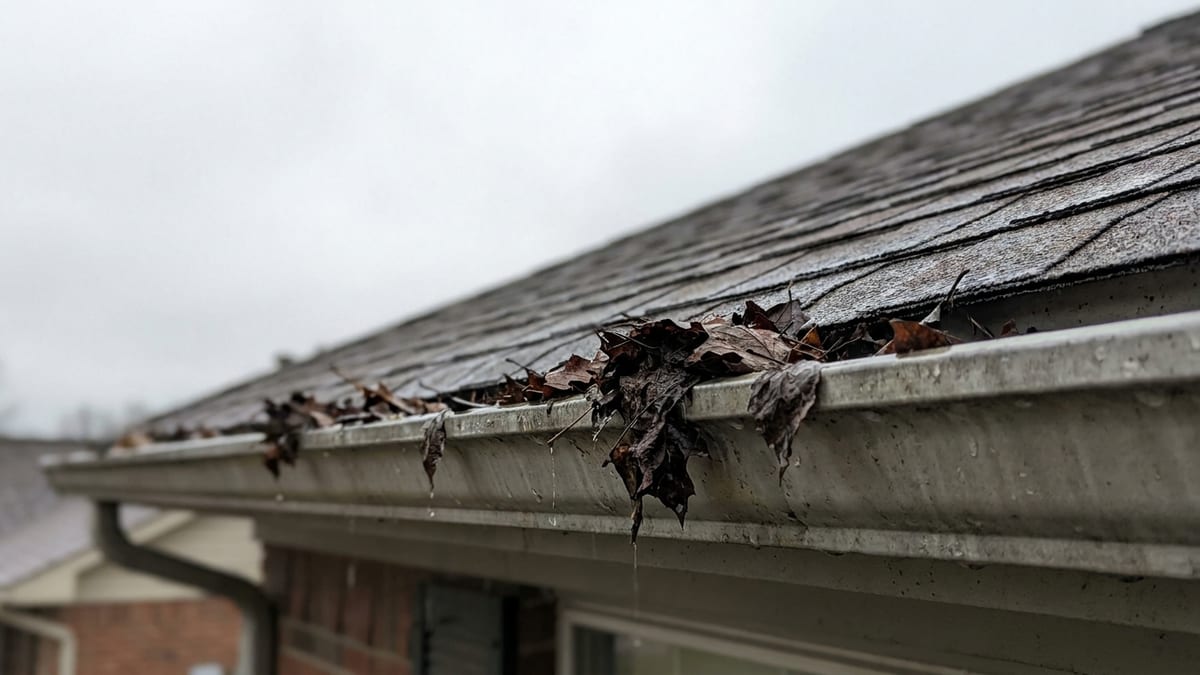
A gutter cleaning job invoices somewhere between $100 and $600, and most of them land near the bottom of that range. A two-man crew burns 60 to 90 minutes on it once you count drive time, ladder setup, flushing downspouts, and bagging debris off the property. Now stack a $50 to $200 exclusive lead cost on top of that, and the job is a wash or a loss before the truck leaves the yard.
That is the entire gutter cleaning lead question, and most contractors never run the numbers on it. They see a cheap, easy-to-close call, they see the phone ringing, and they assume volume will sort it out. Volume does not sort it out. Volume multiplies whatever the unit economics already are.
Here is the honest version: cleaning leads are worth running under specific conditions, and they are a crew-wasting distraction under every other condition. The difference is whether the cleaning call is a job or a door.
Is gutter cleaning actually a lead you should pay for?
Start with the buyer. A homeowner calling about gutter cleaning is not shopping. There is water sheeting over the front edge, there is a seedling growing out of the trough, or the downspout is pouring into the foundation during every storm. They want it handled this week, they are not collecting three quotes, and they will book with whoever answers the phone.
That is why the close rate is high. It is also why the ticket is low. Nobody negotiates hard over $250, and nobody pays a premium for it either.
The problem is that high close rates on small tickets do not fix bad math. A 60% close rate on a $200 job produces $120 of revenue per lead. Pay $75 for that lead and you have $45 left to cover labor, fuel, insurance, ladders, and the office. You are working for the privilege of working.
This is the core distinction that separates a healthy gutter operation from a busy one, and it runs through every campaign on our gutter lead generation page: the cleaning call is cheap to win and cheap to deliver. The money in gutters sits in guards and seamless replacement, and the cleaning visit is one of the few ways to get a ladder against the house and a written quote in a homeowner's hand before a competitor ever shows up.
What is a gutter job actually worth by type?
Sort your work by ticket before you sort it by lead source. The spread is wide enough that treating all gutter leads the same is the first mistake.
| Job type | Typical ticket | Buyer urgency | How it closes |
|---|---|---|---|
| Job typeCleaning and downspout clearing | Typical ticket$100-$600 | Buyer urgencyThis week | How it closesOn the phone |
| Job typeRepair — sagging runs, leaking joints, re-pitch | Typical ticket$150-$600 | Buyer urgencyThis week | How it closesOn the phone |
| Job typeGutter guards | Typical ticket$600-$4,000 | Buyer urgencyWeeks | How it closesQuote visit |
| Job typeSeamless aluminum replacement | Typical ticket$1,200-$2,400 | Buyer urgencyWeeks | How it closesQuote visit |
| Job typeCopper and specialty profiles | Typical ticket$25-$40 per foot | Buyer urgencyMonths | How it closesQuote plus material selection |
Two different businesses live in that table. The top two rows are dispatch work: answer fast, schedule fast, collect on site. The bottom three are considered purchases where the homeowner compares materials, asks about warranty, and wants to see finished work.
Most gutter companies run both. Very few of them budget for both separately, which is how cleaning campaigns end up quietly consuming the ad budget that should be producing $2,000 tickets.
Why does cost per lead break down on low-ticket work?
Use the standard maximum CPL formula and the answer stops being a matter of opinion.
Max CPL = (Average Job Value × Gross Margin × Close Rate) ÷ 3
The divisor of 3 is a 3x return target on marketing dollars. Run it across four scenarios.
| Scenario | Blended ticket | Gross margin | Close rate | Max defensible CPL |
|---|---|---|---|---|
| ScenarioCleaning only | Blended ticket$250 | Gross margin45% | Close rate50% | Max defensible CPL$19 |
| ScenarioCleaning with 15% guard attach | Blended ticket$460 | Gross margin45% | Close rate50% | Max defensible CPL$35 |
| ScenarioCleaning with 15% guard and 8% replacement attach | Blended ticket$604 | Gross margin45% | Close rate50% | Max defensible CPL$45 |
| ScenarioGuard or replacement lead | Blended ticket$1,600 | Gross margin45% | Close rate30% | Max defensible CPL$72 |
Read the first row again. A standalone cleaning lead is worth about $19 to you. There is no paid channel that reliably delivers exclusive, in-area, phone-verified leads at $19. Not Meta, not Google Local Services Ads, not a performance partner, not an aggregator. The number does not exist, which means standalone cleaning should not be a paid acquisition channel at all. It should be organic: your Google Business Profile, your existing customer list, your route neighbors, and your repeat book.
Now read the third row. Add a realistic attach rate and the same lead is worth $45. That is inside the range where a paid channel can actually work. Nothing about the cleaning changed — what changed is what happens while the crew is on the ladder.
If you want to run your own version of this with your tickets, margins, and close rates instead of mine, the ROI calculator does the same math on your numbers.
How do you turn a cleaning call into a real ticket?
The attach rate is not luck. It is a process the crew runs every single time, and it has four parts.
- Sell the cleaning as an inspection. The phone script changes from "we clean gutters" to "we clean the system and give you a written condition report on every run, every joint, and every downspout." Same job, same price, completely different expectation when the crew arrives.
- Photograph everything from the ladder. Separated seams, rust at the end caps, spikes pulling out of the fascia, standing water showing bad pitch, rotted board behind the hanger, missing kickouts. The homeowner has never seen their own roofline. You have the only camera in the world that can show it to them.
- Quote before you leave. Not "we'll email you something." A number for guards on the problem elevation, a number for replacing the runs that are shot, and a number for the full system, handed over while the ladder is still on the truck.
- Log the attach rate as a metric. Jobs quoted divided by cleanings performed, and jobs sold divided by jobs quoted, by crew. Model 10 to 20 percent until your own data replaces the guess. If a crew is attaching at 3 percent, that crew is not running the process, and your CPL ceiling just collapsed back to $19.
The companies that do this well stop thinking of cleaning as a revenue line and start thinking of it as the cheapest qualified site visit in the trade. Nobody else gets to inspect a roofline while being paid to be there.
When should a gutter company actually run cleaning campaigns?
Three conditions, and you want all three.
Route density. Cleaning only works when you can cluster it. Six jobs in two zip codes is a profitable day. Six jobs spread across a 50-mile service area is a losing day with a lot of windshield time. If a campaign cannot concentrate geographically, do not run it.
Seasonal timing. Leaf drop drives the fall rush and freeze-thaw damage drives the early spring one. Campaigns should start 6 to 8 weeks ahead of local peak leaf drop, not during it, because by the time the gutters are overflowing every competitor in the county is already booked out and the homeowner is calling four companies.
Crew capacity you would otherwise idle. Cleaning is excellent filler for a crew that has a hole in the schedule. It is terrible work to buy leads for when your installers are already booked three weeks out on replacements — you are paying for leads that pull a crew off higher-margin work.
If you are planning next season's budget rather than reacting to this week's phone, run cleaning as an organic and database play and spend the ad dollars on the quote-visit side of the business. The guard and replacement campaigns on our gutter lead generation page are built for exactly that split.
Why do shared cleaning leads fail worse than shared replacement leads?
A shared lead gets sold to three to five contractors. On a $20,000 roof that is painful. On a $250 cleaning it is fatal.
The homeowner now has four companies calling about a job that should have been a two-minute booking. The only lever anyone has is price, so the ticket gets bid down toward cost. And you paid for the lead whether or not you were the one who answered first. Shared leads close in the 5 to 12 percent range against 20 to 35 percent for exclusive work — that gap is survivable on high-ticket jobs and unsurvivable on low-ticket ones.
This is why low-ticket trades have to be stricter about exclusivity, not looser. The full breakdown of the close-rate difference sits in exclusive vs shared leads, and the math there applies with extra force to anything under $1,000.
What kills gutter cleaning leads after they come in?
Slow response, almost every time. The cleaning buyer is in a dispatch mindset — they want a date, not a relationship. If you call back the next morning, the job is already scheduled with someone else and you paid for the privilege of finding that out.
The research everyone quotes holds here: you are 21 times more likely to qualify a lead when you call inside five minutes versus thirty, and 35 to 50 percent of sales go to whoever responds first. On a $250 ticket, one missed callback wipes out the margin on two completed jobs. The system for closing that gap is laid out in speed to lead, and it matters more on cheap work than on expensive work, because there is no margin left to absorb the loss.
The second killer is the crew that treats the visit as a chore. A technician who clears the trough, bags the debris, and drives away has delivered exactly $250 of value and burned the only shot at the roofline. That is a training problem, not a lead problem, and no lead source will fix it.
The short version
- Standalone gutter cleaning is not a paid acquisition channel. The math caps out around $19 per lead and nothing delivers exclusive leads at that price.
- Cleaning becomes worth paying for when the visit is structured as an inspection that attaches guards and replacement work, which pushes the defensible CPL into the $35 to $45 range.
- Guard and replacement leads carry a CPL ceiling three to four times higher. That is where the ad budget belongs.
- Cluster cleaning work geographically, start campaigns 6 to 8 weeks before peak leaf drop, and only buy cleaning leads when you have crew capacity you would otherwise idle.
- Insist on exclusivity. Shared low-ticket leads turn into a price race you pay to lose.
- Answer inside five minutes or the economics never get a chance to work.
If you want the gutter side of your business built around the quote visit instead of the cleaning invoice, we install and manage the campaigns, the landing pages, and the booking flow inside your own Meta ad account, so the brand and the pixel data stay with your company. Get started here and we will walk through your tickets, your attach rate, and what the blended number has to be for the channel to pay.
Frequently asked questions
Are gutter cleaning leads worth paying for?
Not on their own. At a typical $250 cleaning ticket, 45% gross margin, and a 50% close rate, the maximum defensible cost per lead is under $20, which is below what almost any paid channel delivers. They become worth paying for only when the cleaning visit reliably attaches guard or replacement work and lifts the blended ticket.
What is a gutter cleaning lead worth compared to a gutter replacement lead?
A cleaning job runs roughly $100 to $600 and a seamless aluminum replacement runs roughly $1,200 to $2,400, with guards adding $600 to $4,000. That means one replacement lead can carry a cost per lead three to four times higher than a cleaning lead and still clear the same return, which is why most gutter companies should spend the bulk of their budget on replacement and guard campaigns.
How do you get gutter guard and replacement jobs out of cleaning calls?
Treat every cleaning as a paid roofline inspection. The crew photographs sagging sections, separated joints, rust, pitch problems, and fascia damage, and leaves a written condition report with a quoted option for guards or replacement before they pull the ladder down. Track your attach rate as a real number and model it at 10 to 20 percent until your own data says otherwise.
When should a gutter company run cleaning campaigns?
Run them when you need route density in a specific set of zip codes, when you are 6 to 8 weeks ahead of peak leaf drop, and when you have the crew capacity to work a tight geographic cluster. Running cleaning leads across a 60-mile service radius in a slow month is how the ticket gets eaten by windshield time.
Should gutter cleaning leads be exclusive?
Yes, because shared cleaning leads are the worst version of a low-ticket lead. A homeowner shopping a $250 job across three companies turns it into a pure price race, and you pay for the lead whether you win it or not. Exclusive leads close at a far higher rate, which is the only thing that makes a small ticket survive a lead cost.