A window company can run one campaign for "windows and doors" and never notice it is quietly losing money twice. The whole-home window buyer worth $18,000 is being bid for at a price ceiling set by a $2,400 entry door. And the entry door buyer is being chased with creative built for a 12-window project they are not thinking about.
Both leads come in. Both get worked. The blended cost per lead looks fine on the report. Underneath it, the window campaign is underfunded and the door campaign is overpriced, and nobody can see it because the numbers are averaged together.
Here is how door buyers actually differ from window buyers, what each ticket is worth, the maximum cost per lead each one supports, and when splitting the campaigns is worth the extra setup work.
Why do door replacement leads behave differently from window leads?
Because doors are three different purchases, and only one of them looks anything like a window project.
The forced-replacement door buyer
The door was kicked in. The frame rotted out. The slider came off the track and will not lock. The storm blew the screen door apart. This homeowner is not shopping a home improvement project, they are solving a security or weather problem that exists right now.
Ticket: $1,200 to $4,000. Sales cycle: days. Close rate on a fast exclusive lead: 30 to 40 percent, because the decision is small and urgent. This buyer goes to whoever answers the phone and can measure this week. If you call back tomorrow, the job is gone.
The curb-appeal door buyer
The front door is faded, dented, or just dated, and the homeowner wants the house to look different from the street. This is an emotional, visual purchase. They have been staring at a photo on Pinterest or a neighbor's new fiberglass door for six months before they ever fill out a form.
Ticket: $2,500 to $8,000 for fiberglass with sidelights, more for custom wood or full entry systems. Sales cycle: one to three weeks. Close rate: 25 to 35 percent on exclusive leads. They are not price shopping as hard as the forced buyer, but they want to see finished work before they call.
The patio door buyer
This is the one that rides closest to windows. A homeowner replacing a 30-year-old slider is usually thinking about light, drafts, hard-to-open panels, and how the back of the house looks. Patio door shoppers convert into whole-home window quotes more often than any other door lead, which is why they belong in the same sales process even when the ad campaign is separate. Our window lead generation page treats patio doors as the bridge between the two.
Ticket: $1,500 for a basic vinyl slider up to $25,000 for a multi-panel sliding or folding system. Sales cycle: two to six weeks. Close rate: 20 to 30 percent.
What is a door replacement job actually worth in 2026?
You cannot set a lead ceiling until you know your real ticket mix. Regional labor, frame condition, and structural changes move these, but the ranges are typical for installed work.
| Scope of work | Typical installed price | Buyer type |
|---|---|---|
| Scope of workSteel entry door, slab and hardware | Typical installed price$800-$2,200 | Buyer typeForced / budget |
| Scope of workFiberglass entry door | Typical installed price$2,000-$5,000 | Buyer typeCurb appeal |
| Scope of workFull entry system with sidelights and transom | Typical installed price$4,000-$12,000 | Buyer typeCurb appeal |
| Scope of workVinyl sliding patio door | Typical installed price$1,500-$4,000 | Buyer typeComfort / replacement |
| Scope of workFiberglass or aluminum-clad slider | Typical installed price$3,000-$7,000 | Buyer typeComfort / upgrade |
| Scope of workFrench patio doors | Typical installed price$3,000-$8,000 | Buyer typeDesign-driven |
| Scope of workMulti-panel slider or folding wall system | Typical installed price$8,000-$25,000 | Buyer typeRenovation-driven |
| Scope of workWhole-home window replacement (for comparison) | Typical installed price$12,000-$30,000 | Buyer typeProject buyer |
The pattern matters more than any single line. A door job is one to two crew days. A whole-home window job is three to five. That changes how you think about which campaign fills a hole in next week's schedule.
The formula that sets your ceiling
Run this per campaign, not per company.
Max cost per lead = (average job value x gross margin x close rate) / 3
Entry door campaign: $3,500 x 0.45 margin x 0.30 close = $472, divided by 3 = a $157 maximum cost per lead.
Patio door campaign: $6,000 x 0.42 margin x 0.28 close = $705, divided by 3 = a $235 maximum cost per lead.
Whole-home window campaign: $14,000 x 0.40 margin x 0.25 close = $1,400, divided by 3 = a $467 maximum cost per lead.
Those three numbers are not close to each other. If you run one blended campaign and hold it to $157, you will get outbid on every serious window buyer in the market. Hold it to $467 and you will overpay for every $2,400 door. That single spread is the entire argument for splitting the campaigns. The broader version of this math is in our guide to cost per lead.
Why does cost per acquired job decide this, not cost per lead?
Because the invoice price of a lead says nothing about how many other companies got handed the same homeowner. Cost per acquired job is what pays your installers.
| Channel | Cost per lead | Typical close rate | Cost per acquired job |
|---|---|---|---|
| ChannelReferrals and past customers | Cost per lead$0 | Typical close rate40-60% | Cost per acquired jobNear $0 |
| ChannelGoogle Business Profile / organic | Cost per lead$0-50 | Typical close rate20-40% | Cost per acquired job$100-250 |
| ChannelShared marketplace leads | Cost per lead$25-75 | Typical close rate5-12% | Cost per acquired job$300-1,200 |
| ChannelLocal Services Ads | Cost per lead$30-90 | Typical close rate15-30% | Cost per acquired job$200-500 |
| ChannelMeta advertising | Cost per lead$25-110 | Typical close rate10-20% | Cost per acquired job$250-1,100 |
| ChannelExclusive leads (performance partner) | Cost per lead$50-200 | Typical close rate20-35% | Cost per acquired job$200-900 |
| ChannelExclusive booked appointments | Cost per lead$200-400 | Typical close rate25-40% | Cost per acquired job$600-1,400 |
A $40 shared door lead closing at 8 percent costs $500 per job on a $2,800 ticket. A $120 exclusive lead closing at 30 percent costs $400 per job, and the quote is usually bigger because you are not one of four companies racing to the bottom on the same slider. We break that comparison down fully in exclusive vs. shared leads.
There is a second cost almost nobody tracks on doors: measure time. An entry door measure with photos, frame inspection, and a written quote is 45 to 60 minutes plus travel. At an 8 percent close rate you are running twelve measures to sell one $2,800 door. Price that at your estimator's loaded hourly cost and the cheap lead stops being cheap.
Should doors get their own campaign or ride along with windows?
Here is the decision framework, in order.
- Check your ticket spread. If your average door job and your average window job are within about 2x of each other, blending is survivable. If the spread is 4x or more, which it is for most window companies, split them.
- Check your monthly volume. Meta campaigns need enough conversions to optimize. If a separate door campaign would produce fewer than about 25 to 30 leads a month, keep it inside the window campaign as a second ad set rather than a separate budget line.
- Check your crew capacity. Door jobs are short, they fill schedule gaps, and they do not need a full install crew for a week. If you have open days, doors buy them back faster than windows.
- Check your sales process. If your reps are trained to quote windows at a door appointment, the door campaign is also a window campaign. If they are not, you are leaving the attachment revenue on the table and the door campaign has to pay for itself alone.
- Set separate ceilings and report separately. Even if the ads live in one account, the close rate, average ticket, and cost per acquired job for doors and windows must appear as separate rows. Blended reporting hides every problem in this article.
When blending works
Smaller companies running under $4,000 a month in ad spend usually get better results from one well-funded campaign than two starved ones. Run "windows and doors" as one campaign, but use separate ad sets and separate landing questions so you can see which buyer each lead is, then split later when volume supports it.
When splitting wins
Once you are consistently producing 50-plus leads a month, split. The creative is different, the offer is different, the seasonality is different, and the cost ceilings are different by 3x. At that point one campaign is just an average hiding two businesses.
How do you run a door campaign that actually books?
Lead with the finished door, not the brand
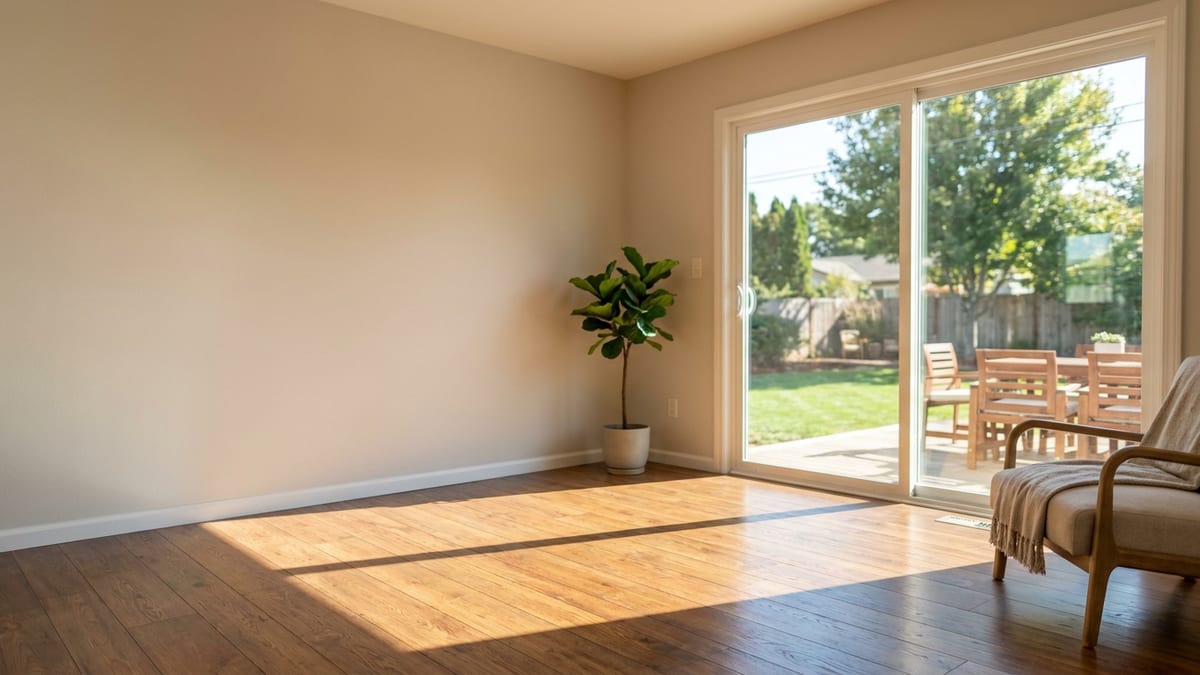
A door is the one home improvement product the homeowner can picture instantly. Real finished-install photography, shot straight on from the walkway or from inside the living room with light coming through, outperforms product renders and logo-heavy creative every time. For patio doors, interior shots that show light across the floor beat exterior shots.
Never present AI-generated or stock imagery as your own completed work. Use your real jobs.
Price the entry point honestly
"Entry doors installed from $2,495" sets expectations and filters out the homeowner shopping a $400 big-box slab. "Free estimate" filters nothing. Remember an in-home estimate is a sales appointment, so say so plainly: a measure and a written quote at the house.
Run the seasonal swing on purpose
Door demand does not match window demand. Entry door curb-appeal work spikes ahead of spring and again in early fall. Forced replacement spikes after storms and after the first hard freeze when sliders stop sealing. Winter is often the best door window of the year, because window projects slow down and doors keep installing in a day. More on timing in our seasonal marketing guide.
Answer the phone in five minutes
The forced-replacement door buyer is the most time-sensitive lead in the windows and doors category. Someone with a broken slider is calling three companies this afternoon. If you want the math on what delay costs, read speed to lead.
How many door leads do you need to hit a revenue target?
Work backward from revenue, not forward from budget.
Say you want to add $600,000 in door revenue in a year at a $3,500 average ticket. That is roughly 171 jobs. At a 30 percent close rate on exclusive leads, that is about 571 leads a year, or 48 a month.
Now compare the same $600,000 on whole-home windows at a $14,000 average ticket. That is 43 jobs. At a 25 percent close rate, 172 leads a year, about 15 a month.
Same revenue. Three times the lead volume, three times the measures, three times the follow-up on the door side. That is not an argument against doors. It is an argument for knowing which business each lead belongs to before you judge the cost per lead, and for making sure every door appointment gets a window quote attached.
What kills door leads after they come in?
- Slow callbacks on forced replacements. Four hours is already late. The next day is a loss.
- No price anchor anywhere. Homeowners who see a $400 slab at the big-box store and no number from you assume you are three times the price. Give them a starting figure.
- Treating a door lead as a small lead. A patio door shopper with 22 original windows is a $25,000 appointment wearing a $4,000 hat.
- No photo set. Door buyers decide visually. If your follow-up text has no finished-install photos, you are competing on price only.
- Blended reporting. If doors and windows share one line on the dashboard, you will never find the campaign that is actually broken.
The short version
Doors and whole-home windows are two different buyers with two different tickets and two different cost-per-lead ceilings, separated by roughly 3x. Run them as separate campaigns the moment your volume supports it, keep separate close-rate and cost-per-acquired-job reporting either way, and train your reps to quote windows at every door appointment so the cheaper lead carries the bigger project.
If you want a door and window system built on your own Meta ad account, with the two campaigns reported separately so you can actually see which one is working, book a call and we will walk the numbers for your market.
Frequently asked questions
Should window companies run separate ad campaigns for door replacement leads?
In most markets, yes. A door job averages $1,500 to $12,000 while a whole-home window project averages $12,000 to $30,000, which means the two campaigns support completely different maximum costs per lead. Blending them forces you to judge both by one number and you will underbid on windows while overpaying on doors.
What do door replacement leads cost in 2026?
Shared marketplace door leads typically run $25 to $75 but close at 5 to 12 percent because three to five companies get the same homeowner. Exclusive door leads generally run $50 to $200 and close at 20 to 35 percent. Google Local Services Ads and search clicks for door replacement usually land higher per lead but carry strong intent and limited volume.
Is a patio door lead worth more than an entry door lead?
Usually yes. Sliding patio doors run roughly $1,500 to $5,000 installed, French doors $3,000 to $8,000, and multi-panel sliding or folding systems $8,000 to $25,000, while most entry door replacements land between $1,200 and $6,000. Patio door buyers also attach more often to a larger window or sunroom project at the appointment.
Can I upsell windows off a door replacement lead?
Yes, and that is the real argument for running door campaigns. The homeowner is already letting you measure, inspect, and talk about drafts and energy bills, so a whole-home window quote presented at the same appointment costs you nothing extra in lead cost. Track attachment rate by source so you can see what the door campaign is really worth.
When should a door campaign get a bigger budget than the window campaign?
When your crews have open install days and your window pipeline is long. Door jobs are one to two days of labor with shorter lead times, so they fill schedule gaps fast in slow months. Many contractors push doors in late fall and midwinter, then shift the budget back to whole-home windows ahead of spring.