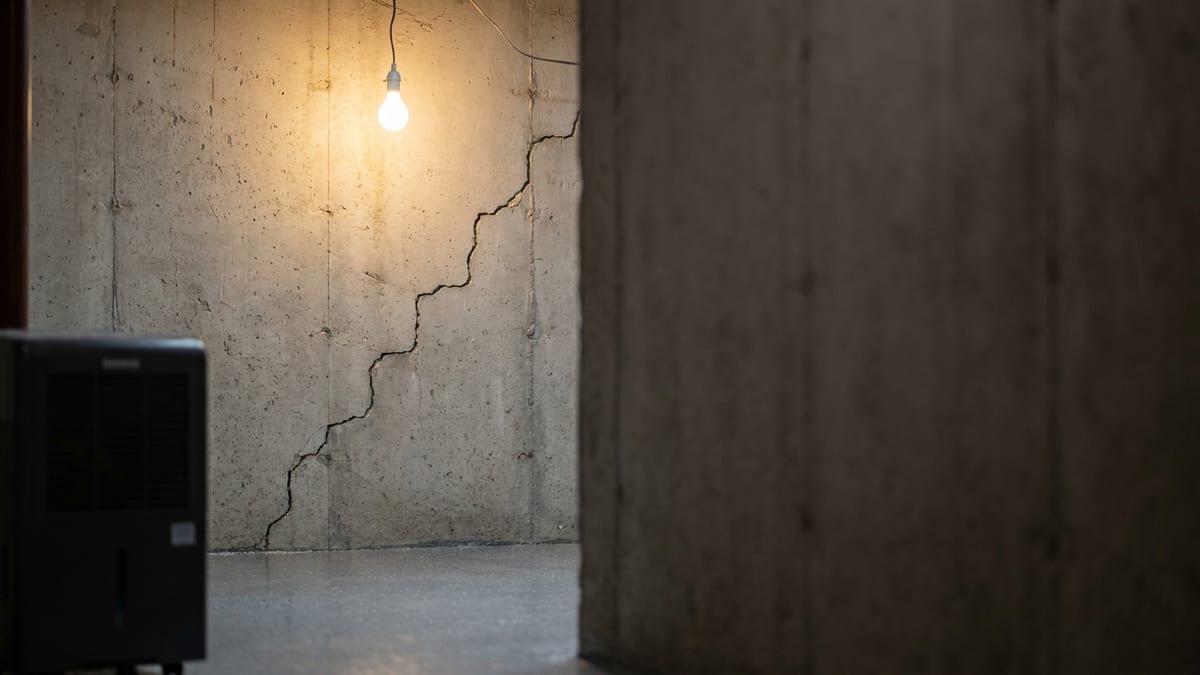
A foundation company can run two campaigns in the same metro, on the same budget, in the same month, and end up running two different businesses. One books 35 crack injections at $900 a ticket. The other books five pier jobs at $19,000 a ticket. The second one produces nearly three times the revenue on a fraction of the leads, with fewer trucks moving and fewer homeowners calling three competitors for a cheaper number.
Most foundation marketing plans never make that choice on purpose. They run one campaign, take whatever comes in, and then complain the leads are small and cheap. The leads are doing exactly what the campaign told them to do.
Here is how the two buyers actually differ, what each ticket is worth, and the math that decides where your budget should go.
Why do crack repair and pier installation leads behave like two different businesses?
They are two different purchases with two different triggers, two different urgency levels, and two different decision-makers in the household.
The crack repair buyer
This homeowner saw water seeping through a wall after a heavy rain, or noticed a hairline crack widening behind the furnace, or is prepping a basement to finish and wants the wall sealed first. They search "foundation crack repair near me," call two or three companies, and book whoever answers and can quote a number fast.
Ticket: $400 to $2,500. Sales cycle: days. Close rate on a good exclusive lead: 30 to 40 percent, because the decision is small enough to make on the phone or at the wall.
This is a volume game. It works when the cost per lead is low, routing is tight, and someone picks up on the first ring. It does not survive a $150 lead.
The underpinning buyer
This homeowner has lived with it for years. The front door sticks in August. The tile in the hallway has a crack that keeps reopening. A garage corner has dropped half an inch. Nothing forced the issue until something did: a home sale, a refinance appraisal, an insurance renewal, a structural engineer's letter, or a family member who finally said enough.
Ticket: $10,000 to $30,000, higher on full perimeter underpinning. Sales cycle: inspection in the first week, proposal at the inspection or within days, signed within two to six weeks depending on financing. Close rate on a well-worked exclusive lead: 20 to 30 percent.
This buyer is almost never searching for helical piers when a campaign first reaches them. They are reacting to a symptom they do not have a name for. That is why the channel that wins them looks nothing like the channel that wins a crack injection, and why our foundation repair lead generation page builds them as two separate campaigns with two separate budgets.
What is a foundation repair job actually worth in 2026?
You cannot set a lead-cost ceiling until you know your real ticket mix. Soil type, access, pier depth, and local engineering requirements move these numbers, but the ranges are typical.
| Scope of work | Typical installed price | Buyer type |
|---|---|---|
| Scope of workEpoxy or polyurethane crack injection (per crack) | Typical installed price$400-$1,200 | Buyer typeReactive / small |
| Scope of workCarbon fiber straps on a bowing wall | Typical installed price$500-$900 per strap | Buyer typeReactive / planned |
| Scope of workPolyurethane foam slab lifting | Typical installed price$1,500-$5,000 | Buyer typePlanned |
| Scope of workWall anchors or I-beam bracing | Typical installed price$4,000-$12,000 | Buyer typePlanned |
| Scope of workPartial underpinning (push or helical piers) | Typical installed price$8,000-$18,000 | Buyer typePlanned / forced |
| Scope of workFull perimeter underpinning | Typical installed price$18,000-$30,000+ | Buyer typePlanned / forced |
| Scope of workPier work bundled with drainage and grading | Typical installed price$20,000-$40,000 | Buyer typePlanned / forced |
The pattern matters more than any single line. Converting one homeowner from a $900 injection to a $19,000 pier package is worth more than winning twenty extra crack jobs, and it costs you one crew week instead of twenty service calls.
The formula that sets your cost-per-lead ceiling
Run this per campaign, not per company.
Max cost per lead = (average job value x gross margin x close rate) / 3
Crack repair campaign: $1,100 x 0.50 margin x 0.35 close = $192.50, divided by 3 = a $64 maximum cost per lead.
Pier campaign: $18,000 x 0.40 margin x 0.25 close = $1,800, divided by 3 = a $600 maximum cost per lead.
Those are not close. Hold one blended campaign to $64 and you will never outbid anyone for the underpinning buyer. Hold it to $600 and you will lose money on every crack injection you book. That single number is the entire argument for splitting the campaigns.
If you want to run your own version of that math against your real close rate and job value, the ROI calculator does it in about two minutes.
Why is cost per lead the wrong number for foundation contractors?
Because the invoice price ignores how many other companies got handed the same homeowner, and foundation work is one of the easiest trades in home improvement to shop. Cost per acquired job is the number that pays a crew.
| Channel | Cost per lead | Typical close rate | Cost per acquired job |
|---|---|---|---|
| ChannelReferrals and past customers | Cost per lead$0 | Typical close rate40-60% | Cost per acquired jobNear $0 |
| ChannelGoogle Business Profile / organic | Cost per lead$0-50 | Typical close rate20-40% | Cost per acquired job$125-250 |
| ChannelShared marketplace leads | Cost per lead$35-110 | Typical close rate5-12% | Cost per acquired job$400-1,500 |
| ChannelLocal Services Ads | Cost per lead$35-110 | Typical close rate15-30% | Cost per acquired job$200-600 |
| ChannelMeta advertising | Cost per lead$25-110 | Typical close rate10-20% | Cost per acquired job$250-1,100 |
| ChannelExclusive leads (performance partner) | Cost per lead$50-200 | Typical close rate20-38% | Cost per acquired job$200-900 |
| ChannelExclusive booked inspections | Cost per lead$200-400 | Typical close rate25-40% | Cost per acquired job$600-1,400 |
A $45 shared lead closing at 8 percent costs $563 per job. A $140 exclusive lead closing at 28 percent costs $500 per job, and the ticket is usually bigger because you are not one of four companies racing to the bottom on the same cracked wall. The full version of that math is in our breakdown of exclusive vs. shared leads.
There is a second cost almost nobody tracks in foundation repair: inspection time. A proper structural inspection with elevation readings, a photo set, crack mapping, and a written scope is 60 to 120 minutes plus travel. At an 8 percent close rate you are running twelve inspections to sell one job. Price that at your inspector's loaded hourly cost, add fuel, and shared leads stop looking cheap.
How do you reach the pier buyer before they search?
The $19,000 underpinning job rarely starts with a search. It starts with a symptom the homeowner has normalized. Your campaign has to name the symptom before they ever type a query.
What works in the ad:
- Symptom hooks, not product names. "Doors that stick in the same spot every summer." "A gap opening above the garage door." "Floors that slope toward one corner." Nobody searches for helical piers. Everybody recognizes their own door.
- Real finished work. Photos of installed piers, leveled slabs, closed cracks, and the crew on site. Homeowners judge structural work on whether you look like you have done it a hundred times.
- The engineer's language, briefly. Settlement, soil movement, load transfer to stable strata. Enough to signal competence, not enough to lecture.
- Trigger targeting. Recent homebuyers, homeowners in known expansive-clay zip codes, and neighborhoods with a housing stock age that matches the failures you see every week.
- A free inspection offer that is honest about what it is. An on-site inspection with a written proposal is a sales appointment. Say inspection and proposal. Do not promise nobody will try to sell them anything.
What kills it: a generic "foundation repair, call now" ad with a stock photo of a house. That ad competes with every marketplace in your market on price alone.
If you are ready to run two real campaigns instead of one blended one, get started here and we will map the split for your market.
How do you triage a crack repair call that might actually be a pier job?
This is where most foundation companies leave the most money. A meaningful share of inbound "I need a crack sealed" calls are structural, and a meaningful share of "I think I need piers" calls are cosmetic shrinkage cracks that should be a one-hour injection.
Build a five-question intake script and make every person who answers the phone use it:
- Where is the crack and which way does it run? Vertical hairlines in poured walls are often shrinkage. Stair-step cracks in block, horizontal cracks, and cracks wider at one end point structural.
- How wide is it? Ask them to measure with a coin or a credit card edge. Anything past a quarter inch changes the conversation.
- Is it moving? A crack that has reopened after a previous patch is a settlement story, not a sealing story.
- What else is happening in the house? Sticking doors, drywall cracks above door frames, sloping floors, separating trim, a chimney pulling away.
- What made you call today? Sale, refinance, insurance, inspection report, or a crack that finally scared them. The trigger tells you the timeline and the budget ceiling.
Answers one through four route the appointment to a full structural inspection instead of a service truck. Answer five tells the inspector what the real deadline is.
That triage only works if someone picks up. Foundation calls spike after rain events and after home inspections, and both are winner-takes-first situations. The response discipline behind it is covered in our guide on speed to lead.
What does the lead math look like against a revenue target?
Work backward from the number you actually want, not from a budget you guessed at.
Target: $600,000 in added pier and underpinning revenue.
- Average job: $18,000
- Jobs required: 34
- Close rate on exclusive leads: 25 percent
- Leads required: 136 per year, roughly 11 per month
- At a $130 average cost per lead: about $1,430 per month
Same $600,000 target, crack repair only.
- Average job: $1,200
- Jobs required: 500
- Close rate: 35 percent
- Leads required: 1,429 per year, roughly 119 per month
- At a $60 average cost per lead: about $7,140 per month, plus the dispatch load of 500 jobs
Same revenue. Five times the marketing spend and more than ten times the operational drag. That comparison is the whole post in one table, and it is the reason the pier campaign should get the larger share of budget in almost every market.
The crack campaign still earns its place. It fills gaps in the schedule, generates reviews fast, and produces upsells when triage catches a structural case early. It just cannot be the main engine.
When should each campaign run during the year?
Foundation demand is weather-driven and transaction-driven, and the two buyers peak at different times.
| Period | What drives calls | Which campaign to push |
|---|---|---|
| PeriodLate winter and spring thaw | What drives callsFreeze-thaw movement, snowmelt, wet basements | Which campaign to pushCrack repair, with structural triage |
| PeriodHeavy rain seasons | What drives callsHydrostatic pressure, seepage, visible cracks | Which campaign to pushCrack repair volume, inspections follow |
| PeriodPeak summer drought | What drives callsClay shrinkage, sticking doors, sloping floors | Which campaign to pushPier and underpinning |
| PeriodSpring and summer home sales | What drives callsInspection reports forcing repairs | Which campaign to pushPier, with fast proposal turnaround |
| PeriodFall | What drives callsPre-winter urgency, budget-year planning | Which campaign to pushPier, plus drainage bundles |
Start pier campaigns four to eight weeks ahead of the window you want booked. Creative needs time to learn, and the underpinning buyer takes two to six weeks from first contact to signature. Turning the campaign on the week you want the revenue is a month late.
What should a foundation contractor do first?
Three moves, in order.
- Split your reporting before you split your spend. Tag every lead as crack repair or structural at intake. Report close rate, average ticket, and cost per acquired job separately for each. Most contractors discover their blended numbers were hiding a very good campaign and a very bad one.
- Set two cost-per-lead ceilings using the formula above. Write them down. Enforce them. Stop judging an $18,000 job by a $64 ceiling.
- Put the bigger budget where the bigger ticket is, and make sure those leads are exclusive. A structural lead shared with four other companies turns a $19,000 proposal into a bidding war before you have taken a single elevation reading.
Minyona installs and manages that split as one system in your own Meta ad account. You fund the ad spend directly to Meta, you see every dollar, you keep the pixel and the audiences, and you pay when the system delivers a qualified lead or a booked inspection. Exclusive leads run from $50 to $200 depending on trade and volume, booked appointments from $200 to $400, with a one-time setup fee and no retainer.
If you want to see what the two-campaign split looks like for your market and your ticket mix, get started here.
Frequently asked questions
Should foundation contractors run separate campaigns for crack repair and pier installation?
Yes. A $900 crack injection and a $20,000 pier job have different close windows, different margins, and different maximum costs per lead, so one blended campaign forces you to judge both by the wrong number. Run them as separate campaigns with separate budgets and separate cost-per-lead ceilings.
What do foundation repair leads cost in 2026?
Shared marketplace foundation leads typically run $35 to $110 each but close at 5 to 12 percent because three to five companies get the same homeowner. Exclusive foundation repair leads generally run $50 to $200 and close at 20 to 38 percent. Local Services Ads usually land between $35 and $110 per lead with high intent but limited volume.
How many foundation repair leads do I need to add $600,000 in revenue?
It depends on ticket mix. At an $18,000 average pier job and a 25 percent close rate you need about 134 leads a year, roughly 11 a month. At a $1,200 average crack repair and a 35 percent close rate the same revenue takes about 1,430 leads a year, roughly 119 a month. Same revenue, more than ten times the lead volume on the small-ticket side.
Are crack repair leads worth running at all?
They are worth running when they are cheap, local, and scheduled tightly, and when your intake team is trained to spot the symptoms that turn a crack call into a structural inspection. Crack repair also feeds referrals and reviews. What it cannot do is carry a $200 cost per lead.
Is Meta advertising or Google better for pier installation leads?
Meta for the high-ticket side. Homeowners with legacy settlement are not searching for helical piers yet, they are reacting to a sticking door, a sloping floor, or a pending home sale, and Meta reaches them during that window. Google and Local Services Ads capture the homeowner who already knows what they need, which skews toward smaller, faster tickets.
Frequently asked questions
Should foundation contractors run separate campaigns for crack repair and pier installation?
Yes. A $900 crack injection and a $20,000 pier job have different close windows, different margins, and different maximum costs per lead, so one blended campaign forces you to judge both by the wrong number. Run them as separate campaigns with separate budgets and separate cost-per-lead ceilings.
What do foundation repair leads cost in 2026?
Shared marketplace foundation leads typically run $35 to $110 each but close at 5 to 12 percent because three to five companies get the same homeowner. Exclusive foundation repair leads generally run $50 to $200 and close at 20 to 38 percent. Local Services Ads usually land between $35 and $110 per lead with high intent but limited volume.
How many foundation repair leads do I need to add $600,000 in revenue?
It depends on ticket mix. At an $18,000 average pier job and a 25 percent close rate you need about 134 leads a year, roughly 11 a month. At a $1,200 average crack repair and a 35 percent close rate the same revenue takes about 1,430 leads a year, roughly 119 a month. Same revenue, more than ten times the lead volume on the small-ticket side.
Are crack repair leads worth running at all?
They are worth running when they are cheap, local, and scheduled tightly, and when your intake team is trained to spot the symptoms that turn a crack call into a structural inspection. Crack repair also feeds referrals and reviews. What it cannot do is carry a $200 cost per lead.
Is Meta advertising or Google better for pier installation leads?
Meta for the high-ticket side. Homeowners with legacy settlement are not searching for helical piers yet, they are reacting to a sticking door, a sloping floor, or a pending home sale, and Meta reaches them during that window. Google and Local Services Ads capture the homeowner who already knows what they need, which skews toward smaller, faster tickets.