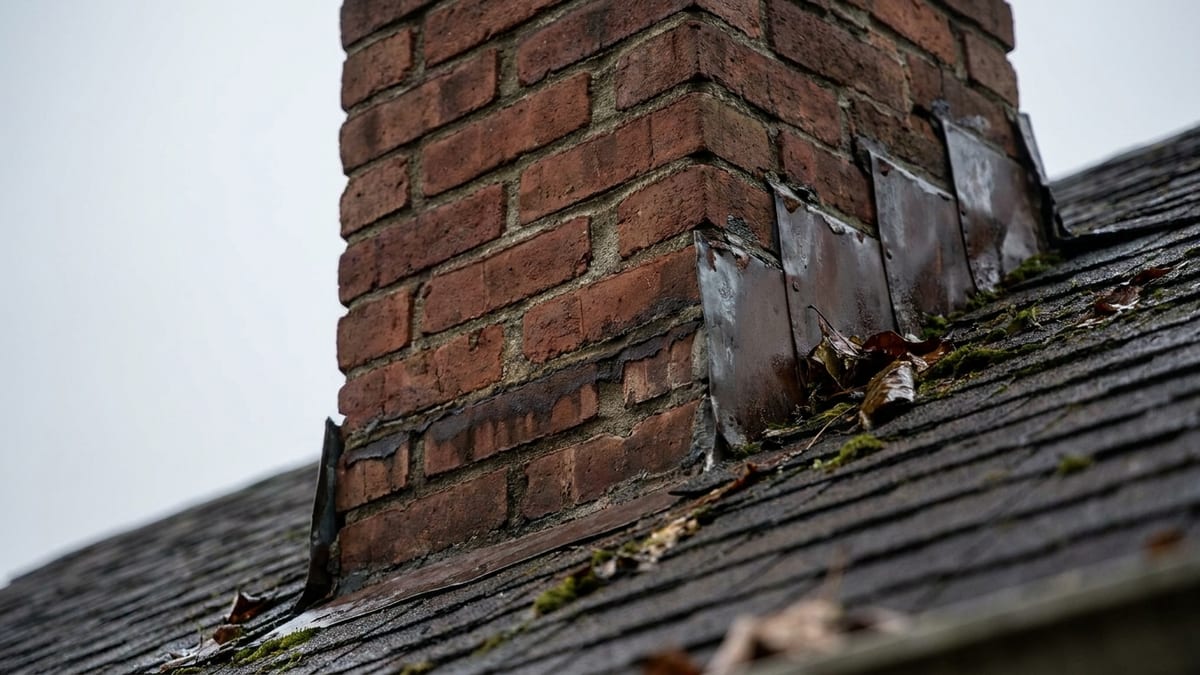
A homeowner calls at 7:40 a.m. There is a brown ring on the bedroom ceiling under the chimney and it rained hard all night. That call is worth $400, or it is worth $18,000, and nothing in the voicemail tells you which one it is.
Most roofing companies dispatch both the same way. Send a truck, climb it, quote something. That is how a service department loses money on half its calls while the other half quietly pays for the loss. The leak call is the most mispriced lead in roofing, because the ticket range behind a single phone call is wider than anywhere else in the trade.
Here is how to triage leak calls before the truck leaves the yard, what each type is actually worth, and what you can afford to pay for the lead that produced it.
Why does one roof leak call split into three different jobs?
Three different buyers hide behind the same sentence: "my roof is leaking."
The penetration or boot leak
A cracked pipe boot, a failed nail pop, a loose ridge cap, a lifted shingle over a valley. The fix takes a two-man crew under ninety minutes and the invoice lands between $350 and $900. These calls are real work, they are quick, and they are also where most repair departments quietly go broke. Drive time plus diagnostic time plus the lead cost can eat the entire ticket.
The chimney or flashing leak
This is the call that pays. Chimneys, sidewalls, dormers, and skylight curbs leak because the flashing detail failed, not because the shingles failed. Reflashing a chimney commonly runs $600 to $2,500, and climbs higher if the counterflashing has to be cut into masonry, if a cricket needs to be built on the uphill side, or if the decking under the stain is soft. Add interior drywall and paint and the homeowner is writing a check for $1,500 to $3,500.
Flashing work also has a quality gap that favors a real roofing company. Plenty of handymen will smear sealant on a chimney and call it a repair. That fails inside two seasons, which is why so many chimney calls are the homeowner's second or third attempt at the same leak.
The leak that is actually a roof
A twenty-two-year-old three-tab roof with granule loss in the gutters, multiple stains in different rooms, and a homeowner who has already patched it twice. The repair is not the job. The job is a $10,000 to $25,000 replacement, and the leak is the reason the homeowner finally picked up the phone. These calls are the entire economic argument for staffing a service department at all, and they are the reason your roofing lead generation program should never judge a leak call on the repair invoice alone.
What is a roof leak job actually worth in 2026?
Use typical ranges, then replace them with your own trailing ninety days.
| Call type | Typical ticket | Crew time | Replacement conversion |
|---|---|---|---|
| Call typePipe boot or nail pop repair | Typical ticket$350 to $900 | Crew time1 to 2 hours | Replacement conversionLow |
| Call typeValley or shingle field repair | Typical ticket$500 to $1,500 | Crew time2 to 4 hours | Replacement conversionLow to moderate |
| Call typeChimney reflash or cricket | Typical ticket$600 to $2,500 | Crew time4 to 8 hours | Replacement conversionModerate |
| Call typeSidewall, dormer, or skylight curb flashing | Typical ticket$700 to $3,000 | Crew time4 to 8 hours | Replacement conversionModerate |
| Call typeLeak with decking rot and interior damage | Typical ticket$1,500 to $4,500 | Crew time1 to 2 days | Replacement conversionHigh |
| Call typeLeak call that becomes a replacement | Typical ticket$10,000 to $25,000 | Crew time1 to 3 days | Replacement conversionN/A |
The column that decides your business is the last one. A service department running at a 10 percent replacement conversion is a cost center with a nice attitude. A service department running at 25 to 35 percent is the cheapest replacement channel in your company, because the homeowner already invited you onto the roof and already believes something is wrong.
Why is cost per lead the wrong number for leak calls?
Because the two outcomes behind the same lead are separated by a factor of thirty.
Run the formula that should set every ceiling you have: maximum cost per lead equals average job value multiplied by gross margin multiplied by close rate, divided by three.
Example: a repair-only service line averages $850 a ticket at 45 percent gross margin and books 60 percent of the calls it dispatches. That is 850 x 0.45 x 0.60, which is $229 of gross profit per lead, divided by three, giving a working ceiling near $76. Subtract the truck roll and the ceiling in practice is closer to $30 to $60 per lead. Anything above that and the repair line is losing money on volume.
Example: now add the replacement. Out of 20 dispatched leak calls, 14 produce a repair at $850 and 4 produce a replacement at $14,000 with a 35 percent margin. Repair gross profit is 14 x 850 x 0.45, or $5,355. Replacement gross profit is 4 x 14,000 x 0.35, or $19,600. Total gross profit on 20 leads is $24,955, which is $1,247 per lead. Divide by three and the blended ceiling is roughly $415 per lead.
Same phone calls. The ceiling moved from $60 to $415 purely because the company documented the roof and presented both options on the visit. That is the entire argument, and it is the same logic that makes exclusive leads cheaper than shared leads once you run cost per acquired job rather than cost per lead.
If you want to run your own version of that arithmetic before you commit to a channel, the ROI calculator does the blended math on your numbers. When you are ready to put a leak and replacement system in your own ad account, get started here.
How do you triage a leak call before you dispatch a truck?
Seven questions, asked in this order, on the first call. They take ninety seconds and they decide whether the truck moves.
- Do you own the home? Renters and property managers calling without authority are the single biggest source of wasted dispatches. Owner-occupied is the first filter.
- How old is the roof? Under ten years is a repair, and possibly a warranty claim against the original installer. Over eighteen years is a replacement conversation with a repair option attached.
- Where is the water showing up, and how many places? One stain near a chimney or a bathroom vent is a detail failure. Three stains in three rooms is a roof.
- How long has it been leaking? A leak from last night is a flashing or penetration failure. A leak the homeowner has watched for two years means decking rot, insulation damage, and a bigger ticket.
- Has anyone already worked on it? A previous patch that failed tells you the homeowner is past the cheap-fix stage and is now willing to pay for a real repair.
- Is it active right now, and is there ceiling damage? Active plus interior damage moves the call to the front of the schedule. Dry and cosmetic can be booked for later in the week with the replacement rep.
- Who needs to be there when we give you the number? If the roof is old enough to be a replacement candidate, both decision makers need to be home. An on-site estimate is a sales appointment, and a single-spouse visit on an $18,000 roof usually ends in a second appointment that never happens.
Those seven answers tell your dispatcher whether to send a service tech, a replacement rep, or a tech with a rep riding along. Getting that routing right is worth more than any discount you could offer.
What about the diagnostic fee?
Charge one. A $125 to $350 leak diagnostic, credited back against the repair, does three things at once: it covers the truck roll on calls that go nowhere, it screens out homeowners collecting free opinions, and it raises the percentage of dispatches that end in signed work. Companies that drop the fee get more calls and less revenue. The fee is also the cleanest way to say out loud that climbing a roof in the rain is skilled labor, not a free sample.
How do you reach the leak buyer before the ceiling stains?
Most leak calls arrive through local search, because the homeowner is reacting to water. Search captures that demand, but search volume is capped by how many roofs failed in your county last week. You cannot scale a business on a number you do not control.
The larger pool is the homeowner who already has the problem and has not acted on it yet: the stain that has been there since last spring, the chimney that was sealed twice by a handyman, the twenty-year-old roof the owner knows is on borrowed time. Those people are not searching. They are scrolling. Meta advertising reaches them with photographs of exactly what their problem looks like, which is why finished-work and problem-detail photography outperforms any discount graphic.
What works in the creative:
- A real photo of failed step flashing at a chimney with the counterflashing pulled out, captioned with what it costs to fix.
- Before and after of a reflashed chimney on a roof that looks like roofs in your market.
- An interior stain photo next to the exterior detail that caused it, so the homeowner connects their own ceiling to a specific roof part.
- A ballpark starting price. A number in the ad brings fewer leads and more appointments that sit.
Run the leak campaign with a repair offer and a separate replacement campaign with a replacement offer. Blending them into one ad set means you either overpay for $400 repairs or get outbid on the roofs that actually move your revenue. The channel-by-channel economics behind that split are laid out in the full guide on how to get roofing leads.
How many leak calls do you need to hit a revenue target?
Work backward. Say the goal is $600,000 in added revenue from the service line in twelve months.
| Input | Assumption | Result |
|---|---|---|
| InputLeads dispatched | Assumption20 per month | Result240 per year |
| InputRepair close rate | Assumption70 percent | Result168 repairs |
| InputAverage repair ticket | Assumption$900 | Result$151,200 |
| InputReplacement conversion | Assumption20 percent of dispatches | Result48 replacements |
| InputAverage replacement ticket | Assumption$14,000 | Result$672,000 |
| InputTotal | Assumption | Result$823,200 |
That model clears the goal at 20 dispatched calls a month, and the replacement column carries 82 percent of the revenue. Cut the replacement conversion to 8 percent and the same 240 leads produce $420,000. The lead count did not change. The presentation on the roof did.
That is why the triage questions and the documentation habit matter more than the lead price. Two companies running identical campaigns at identical cost per lead will post completely different cost per acquired job depending on whether their techs photograph the whole roof or just the leak.
What kills roof leak leads after they come in?
Slow pickup on an active leak
A homeowner with water coming through a ceiling will call three companies in ten minutes and hire whoever answers. This is the most time-sensitive lead in roofing. If you cannot answer live during business hours and text back inside sixty seconds after hours, you are funding your competitor's schedule. The full cadence is in the breakdown of speed to lead.
Sending a tech with no camera discipline
If the tech photographs the flashing and nothing else, the replacement conversation never happens. Standard is twelve to twenty photos: the leak detail, the field shingles, the valleys, the ridge, the penetrations, the gutters, and the attic underside. Those photos are the quote.
Quoting the repair without quoting the alternative
On any roof over fifteen years old, the homeowner gets two numbers in writing on the same visit: the repair, with an honest statement of how many years it buys, and the replacement. Leaving the second number off is not restraint, it is a lost sale to the next company that shows up in the spring.
No follow-up on the repair-only customer
A homeowner who takes the $900 repair on a nineteen-year-old roof is a replacement customer with a timer on them. They belong in a nurture sequence with seasonal check-ins, not in a closed file.
Treating storm season as the whole plan
Leak volume spikes after weather and collapses between events. If your only leak demand is reactive, your crews are idle for weeks at a time. Planned campaigns running in the quiet months are what flatten that curve.
The short version
A leak call is not one lead type, it is three. Price the repair line against a $350 to $3,000 ticket and keep the cost per lead in the $30 to $60 range. Price the replacement line against a $10,000 to $25,000 ticket and it will carry $250 to $400 per lead comfortably. Triage on the phone with seven questions, charge a diagnostic fee, document the entire roof on every visit, and present both numbers before you leave.
Exclusive performance-based roofing leads generally run from $50 per qualified lead, with booked appointments from $200, and a one-time setup. Those numbers only matter next to your blended gross profit per dispatched call, which is the figure almost nobody in this trade tracks and the only one that tells you whether the service truck should roll.
If you want a leak and replacement system running inside your own Meta ad account, with the leads routed by type instead of dumped into one inbox, book a call and we will walk the numbers for your market.
Frequently asked questions
Are roof leak repair leads worth paying for?
They are worth paying for only if you price them against the repair ticket and treat the inspection as the start of a replacement conversation. A $400 to $3,000 repair supports roughly $30 to $60 per lead, while the replacement work those calls uncover supports $250 to $400 per lead, so most roofers should run repair and replacement as separate campaigns with separate ceilings.
How much does a chimney flashing repair cost a homeowner in 2026?
Reflashing a chimney commonly runs $600 to $2,500 depending on chimney size, access, counterflashing condition, and whether masonry work or a cricket is needed. Simple step flashing repairs on a wall or dormer run lower, often $400 to $1,200, and a repair that includes decking replacement and interior patching climbs past $3,000.
Which roof leak calls should a contractor decline?
Decline or charge a diagnostic fee on calls that are outside your drive radius, on roofs you did not install that are under ten years old and still under a workmanship warranty, on rentals where the caller is not the decision maker, and on any call where the homeowner wants a free climb to confirm a claim they already filed with someone else. Those calls consume a crew hour and almost never produce a ticket.
Should roofers charge a diagnostic fee for leak calls?
Yes, in most markets. A $125 to $350 diagnostic or leak-detection fee credited back against the repair filters out the price shoppers, covers the truck roll on the calls that go nowhere, and raises the share of dispatches that end in signed work. Companies that drop the fee see more calls and a lower percentage of them turn into revenue.
How do you turn a leak call into a roof replacement without sounding like a sales pitch?
Document the roof instead of pitching it. Photograph the flashing, the field shingles, the granule loss, the decking, and the attic, then show the homeowner the two options side by side with real numbers: what the repair buys in remaining years, and what a replacement costs. An on-site estimate is a sales appointment, so present both prices on that visit rather than scheduling a second one.