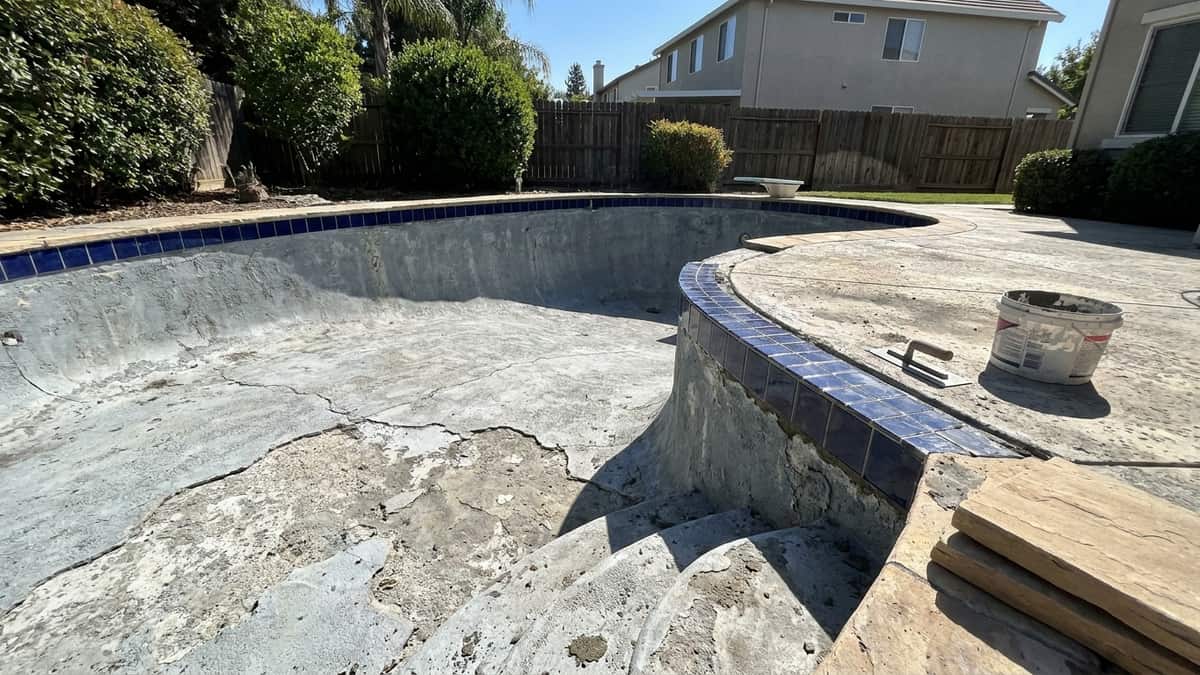
A pool builder's calendar has a cliff in it. New construction inquiries dry up when the weather turns, the crews that were pouring shells in June are looking for hours in November, and the overhead does not care what season it is. Meanwhile every pool in your service area that was plastered ten to fifteen years ago is failing right now: chalky surface, stained shell, cracked waterline tile, coping that has shifted, a heater on its last winter.
That is a $15,000 to $40,000 job sitting in thousands of backyards you have already driven past. The remodel and resurfacing market is the most reliable off-season revenue in the pool business, and most builders do nothing to go get it until the phone rings on its own.
Here is what the work is worth, what a remodel lead should cost, and the campaign structure that books drain-and-chip weeks in the months your build crews would otherwise sit.
Why does the pool remodel market run on a different calendar than new construction?
Because the two buyers are triggered by opposite things.
The new-construction buyer disappears in the fall
A homeowner who wants a pool wants it for next summer. They shop in late winter and spring, collect three or more bids on a $50,000 to $80,000 build, and go quiet once it is too late to swim in what they build. Permitting and excavation lead times mean the selling window closes months before the season does.
The remodel buyer wakes up in the fall
The pool owner is on the opposite cycle. All summer the pool was in use and nobody wanted it out of service. Then the cover goes on, the water clears out, and the shell is suddenly visible: rough plaster that scrapes feet, rust streaks, a tile band with a dozen missing pieces, a deck that spalled through another freeze. That is the moment the remodel conversation starts, and it starts in September, October, and November.
That mismatch is the whole opportunity. Remodel demand peaks exactly when construction demand collapses, which is why we build remodel and resurfacing as its own campaign on the pool and spa lead generation page rather than as leftover traffic from a new-build campaign.
The competitive picture is also easier
New pool buyers are trained to collect bids. Remodel buyers often call one or two companies, because the job feels like maintenance rather than a project, and because most builders in the market are not advertising for it at all. Less competition per homeowner means a higher close rate on the same dollar of ad spend.
What is a pool remodel actually worth in 2026?
You cannot set a cost-per-lead ceiling without knowing your ticket mix. Regional pricing, pool size, and access swing these, but the ranges are typical.
| Scope of work | Typical installed price | Buyer trigger |
|---|---|---|
| Scope of workWaterline tile replacement only | Typical installed price$2,500-$8,000 | Buyer triggerCosmetic / failing grout |
| Scope of workStandard plaster refinish | Typical installed price$5,000-$12,000 | Buyer triggerRough or stained surface |
| Scope of workPebble or quartz finish | Typical installed price$8,000-$18,000 | Buyer triggerUpgrade during refinish |
| Scope of workCoping replacement | Typical installed price$3,000-$9,000 | Buyer triggerShifted or cracked stone |
| Scope of workDeck resurfacing or replacement | Typical installed price$4,000-$15,000 | Buyer triggerSpalling, cracking, dated look |
| Scope of workEquipment package (pump, filter, heater, automation) | Typical installed price$2,500-$9,000 | Buyer triggerFailure or efficiency upgrade |
| Scope of workFull remodel package | Typical installed price$15,000-$40,000 | Buyer triggerWhole-backyard refresh |
| Scope of workSpa addition to an existing pool | Typical installed price$8,000-$20,000 | Buyer triggerPlanned upgrade |
The pattern matters more than any single line. A homeowner who called about $6,000 of plaster and leaves signing $24,000 of plaster, tile, coping, and LED lighting is the entire game. Remodel margin lives in the add-ons, and the add-ons only sell when someone is standing at the pool walking the homeowner through what fails next.
The formula that sets your lead ceiling
Run it per campaign, not per company.
Max cost per lead = (average job value x gross margin x close rate) / 3
Resurfacing campaign: $20,000 x 0.35 margin x 0.25 close = $1,750, divided by 3 = a $583 maximum cost per lead.
Equipment-only campaign: $5,000 x 0.35 margin x 0.30 close = $525, divided by 3 = a $175 maximum cost per lead.
Both of those ceilings sit far above what exclusive pool leads actually cost, which is the point. Remodel work carries enough ticket to absorb real advertising, and the builders who never advertise for it are leaving that headroom on the table.
Why is cost per lead the wrong number to judge pool remodel leads on?
Because the invoice price says nothing about how many other companies got handed the same homeowner. Cost per acquired job is what your P&L reacts to.
| Channel | Cost per lead | Typical close rate | Cost per acquired job |
|---|---|---|---|
| ChannelReferrals and past service customers | Cost per lead$0 | Typical close rate40-60% | Cost per acquired jobNear $0 |
| ChannelGoogle Business Profile / organic | Cost per lead$0-50 | Typical close rate20-40% | Cost per acquired job$125-250 |
| ChannelShared marketplace leads | Cost per lead$30-90 | Typical close rate5-12% | Cost per acquired job$400-1,500 |
| ChannelMeta advertising | Cost per lead$30-120 | Typical close rate10-20% | Cost per acquired job$300-1,100 |
| ChannelExclusive leads (performance partner) | Cost per lead$50-200 | Typical close rate20-35% | Cost per acquired job$200-950 |
| ChannelExclusive booked consultations | Cost per lead$200-400 | Typical close rate25-40% | Cost per acquired job$600-1,400 |
A $45 shared lead closing at 8 percent costs $563 per signed job, and the job itself is usually smaller, because you walked into a price comparison instead of a scope conversation. A $130 exclusive lead closing at 28 percent costs $464 per signed job, and you are the only company in the backyard. The long-form version of that math is in our breakdown of exclusive vs. shared leads.
There is a second cost pool builders almost never track: consultation time. A remodel estimate means driving out, measuring the shell, assessing the deck and equipment pad, and writing a scoped proposal with finish options. That is 90 minutes to two hours plus travel. At an 8 percent close rate you are burning twelve of those to sell one job.
If you want to see what your current source actually costs per signed remodel, run your own numbers through the ROI calculator before you change anything.
How do you reach pool remodel buyers before they call anyone?
Remodel demand is latent. The homeowner knows the pool looks tired. They have not decided this is the year. Nobody is typing "pool resurfacing near me" in October. They are scrolling Facebook and Instagram with a covered pool twenty feet away. That is a demand-generation problem, not a search problem.
Photography is the entire ad
This trade is won on images. A drained shell with chipped-out plaster next to the same pool refinished in dark pebble with a fresh tile band sells better than any headline you will write. Use real projects, shot in daylight, showing the waterline and the deck. Homeowners are buying a picture of their own backyard in April.
Target the pool, not the demographic
The strongest remodel audiences are built on home age and home value in neighborhoods where in-ground pools were standard construction. Twelve- to twenty-year-old homes with pools are the sweet spot: the original plaster is at end of life, the equipment is one failure from replacement, and the owner has equity.
Lead with the symptom, not the service
Ads that name what the homeowner is actually looking at outperform generic remodel offers. Rough plaster that scrapes feet. Rust and calcium staining. Tile falling out of the waterline. A deck that gets too hot to stand on. Name the symptom, show the fixed version, and ask for a free on-site remodel assessment, which is a sales appointment, and should be run like one.
Give the off-season a reason to be now
Winter pricing, spring-schedule priority, and "be ready before Memorial Day" all work because they are true. Chipping and refinishing a pool takes the pool out of service for weeks. Doing it in December costs the homeowner nothing in swim days. Say that plainly.
Campaigns run through your own Meta ad account also mean the brand equity from all that finished-project photography stays with your company, along with the pixel data and the retargeting audience. See how it works if you want the structure walked through against your market.
When should the off-season campaign calendar actually start?
A remodel signed in November is a job poured in January. Work backward from that.
- August: build the asset library. Photograph every job you finish during the season, before and after, in daylight. You cannot run this campaign in October on photos you did not take in July.
- September: launch remodel campaigns. Pools are coming out of heavy use and every flaw is visible. This is the highest-intent moment of the year for resurfacing.
- October and November: scale the spend. Closing here fills your winter production schedule. This is the money window.
- December and January: run equipment and automation offers. Lower ticket, faster close, keeps service techs billable and seeds next year's remodel list.
- February: pivot budget back to new construction. Build-season shoppers are starting; remodel spend gets trimmed, not killed.
- March through July: remodel runs at a maintenance budget. Enough to stay visible, not enough to compete with your construction campaigns.
The same logic applies across every seasonal trade, and the general framework is laid out in our guide to seasonal contractor marketing.
How many remodel leads do you need to fill an off-season?
Work backward from the revenue hole, not forward from a budget.
Say you want $600,000 of off-season remodel revenue.
- Average project: $20,000
- Jobs required: 30
- Close rate on exclusive leads: 25 percent
- Leads required: 120
- Spread across a six-month window: 20 leads per month
At $120 per exclusive lead, that is $2,400 a month in lead cost against $100,000 a month in signed work. Move the average ticket to $28,000 by attaching decking and equipment to the refinish and you need 22 jobs instead of 30: the same lead flow produces more revenue with fewer crew mobilizations.
Run the same math with your own numbers before you set a budget. If your close rate is 12 percent instead of 25, you do not have a lead problem, you have a follow-up problem, and doubling spend just doubles the leak.
What kills pool remodel leads after they come in?
Three things, in order.
Slow response. A homeowner who filled out a remodel form on a Sunday afternoon is not going to wait until Tuesday. Response inside five minutes multiplies your qualification rate several times over, and the practical version of that system is in our guide to speed to lead.
No scope conversation. Quoting only what the homeowner asked for is how a $22,000 remodel becomes an $8,000 replaster. Walk the whole backyard. Price the tile, the coping, the deck, the lights, and the pad as options on one proposal.
Dropping the slow yes. Remodel buyers frequently say "probably next year." Next year is real revenue if somebody tags them and calls back in August. Most pool companies never do, which is why their off-season starts from zero every single time.
The short version
New pool construction pays your summer. Remodel and resurfacing pays your winter, and it is sitting in every aging backyard within thirty miles of your shop. The ticket is $15,000 to $40,000, the buyer decides in the fall, the channel is Meta advertising with real finished-project photography, and the only number worth judging it on is cost per acquired job.
If you want your crews booked through the months new construction goes quiet, get started here and we will build the remodel campaign against your market, your pool age data, and your production calendar, running through your own ad account, so the brand you build belongs to you.
Frequently asked questions
When should pool builders start running remodel and resurfacing campaigns?
Start in late summer and run hard through fall and winter. Homeowners decide on remodels after the swim season ends and the pool looks its worst, and a fall-signed contract lets you schedule drain-and-chip work in the months your new-construction crews would otherwise be idle.
What does a pool remodel job typically sell for in 2026?
Renovation and resurfacing projects generally run $15,000 to $40,000 depending on scope. A plaster or pebble refinish, waterline tile, and coping is the common core package, and deck resurfacing, LED lighting, automation, and heater or pump replacement are the add-ons that move the ticket up.
Are pool remodel leads cheaper than new pool construction leads?
Usually yes, because the audience is bigger and less competitive. New construction pulls three or more competing bids on a $50,000 to $80,000 build, while remodel buyers often call one or two companies. Lower ticket, lower lead cost, and a shorter sales cycle.
Why do shared pool leads close so poorly on remodel work?
Because the same homeowner is sold to three to five companies, which turns a scope conversation into a price race before you ever see the pool. Shared leads typically close in the 5 to 12 percent range while exclusive leads close 20 to 35 percent, so the cheaper lead usually costs more per signed job.
How many pool remodel leads do you need to add $600,000 in off-season revenue?
At a $20,000 average project and a 25 percent close rate you need 30 signed jobs and about 120 exclusive leads, roughly 20 a month across a six-month off-season window. Raise the average ticket with decking and equipment add-ons and the required lead count drops fast.