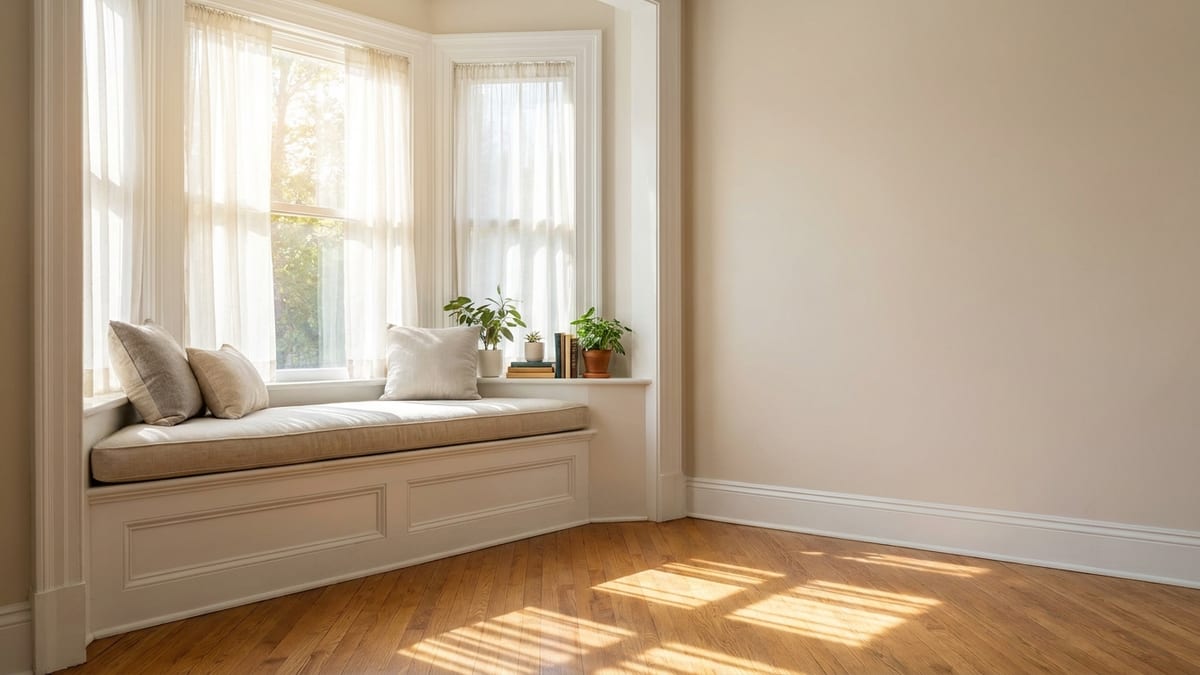
A homeowner fills out a window form. The notes field says "bay window in the living room, the seat is rotting." Most window companies will take four days to call that lead back, send a rep who quotes it as four double-hungs in a row, or quietly decide it is not worth the truck roll.
Meanwhile that single opening is worth $2,500 to $12,000 installed. It is the highest gross profit opening in the trade, and it is routinely the last lead anyone touches.
That gap is the whole opportunity. The custom window lead is undervalued by the market because the quote is harder, not because the job is worse. If you are the company that can price it in one visit and install it without subbing out the carpentry, you are competing against far fewer bidders on a far bigger ticket.
Why does nobody want to quote a bay or bow window?
Ask a window rep why they would rather run a whole-home vinyl replacement quote than one bay window, and you will get three honest answers.
The unit is built to order
A standard double-hung has a price per opening. A bay or bow does not. The price moves with projection angle, seat board material, head and seat insulation, roof style and cladding, frame material, glass package, and whether the unit is a true bay or a flat-mulled assembly. A rep who lives on a per-opening price sheet has nothing to read from, so the quote turns into a phone call to the supplier and a follow-up that never happens.
The opening hides surprises
Bays and bows carry their own weight plus a roof. When the seat is soft or the exterior cladding has failed, there is usually rot in the seat deck, the header, or the cable and knee-brace support. Nobody knows the extent of it until demolition. Reps price that uncertainty by padding the number until the homeowner walks, or by ignoring the lead entirely.
The install eats a day
A crew can swap eight double-hungs in a day. One bay replacement with new seat framing, insulation, interior trim, exterior capping and a roof tie-in is a full day for two people, sometimes two days. If your production manager is paid on openings per day, that job gets scheduled last.
None of those are reasons to skip the work. They are reasons to price it correctly and sell it as a specialty, which is exactly how our window lead generation campaigns are set up for clients who want the bigger tickets instead of the easy ones.
What is a bay, bow or custom window job actually worth in 2026?
These are typical installed market ranges, not quotes. Your region, your frame material and your labor rate move all of them.
| Opening type | Typical installed range | Install time | Why the range is wide |
|---|---|---|---|
| Opening typeReplacement bay (3 units, angled) | Typical installed range$2,500 to $7,000 | Install time1 day | Why the range is wideSeat and head construction, roof condition, frame material |
| Opening typeReplacement bow (4 to 5 units, curved) | Typical installed range$4,000 to $12,000 | Install time1 to 2 days | Why the range is wideUnit width, support cables, exterior cladding and roofing |
| Opening typeNew bay or bow cut into a flat wall | Typical installed range$6,000 to $15,000 | Install time2 to 3 days | Why the range is wideHeader work, exterior framing, interior and exterior finish |
| Opening typeArched, round-top or geometric unit | Typical installed range$1,200 to $4,000 each | Install timeHalf day | Why the range is wideCustom shape fee, trim fabrication, glass package |
| Opening typeOversized picture or wall of glass | Typical installed range$2,000 to $8,000 each | Install timeHalf to full day | Why the range is wideGlass weight, lift requirements, structural opening |
| Opening typeWhole-home replacement including one bay | Typical installed range$12,000 to $30,000 | Install time2 to 4 days | Why the range is wideOpening count plus the specialty unit |
The number that matters is not the top of the range. It is that the average custom opening carries roughly two to five times the revenue of a standard replacement opening, with a gross margin that usually holds up better because almost nobody in your market is bidding the same spec.
Why is cost per lead the wrong number for custom window work?
Contractors compare lead sources on price per lead because it is the only number printed on the invoice. It tells you nothing. A $40 shared lead that closes at 4 percent costs $1,000 per signed job. A $150 exclusive lead that closes at 25 percent costs $600 per signed job and arrives with nobody else calling the same homeowner. The full breakdown of that math lives in our guide to exclusive versus shared leads.
The formula to run before you argue about lead price:
Maximum cost per lead = (average job value x gross margin x close rate) divided by 3
Example: a $6,000 average bay and bow ticket at 40 percent gross margin and a 25 percent close rate gives you $6,000 x 0.40 x 0.25 = $600 of gross profit per lead. Divide by three and your working ceiling is $200 per exclusive lead. That is a very different ceiling than a two-window job at $1,800.
Here is the same math across the window work most companies run:
| Job type | Avg ticket | Margin | Close rate | Break-even CPL | Working ceiling |
|---|---|---|---|---|---|
| Job typeTwo-window replacement | Avg ticket$1,800 | Margin35% | Close rate30% | Break-even CPL$189 | Working ceiling$63 |
| Job typeWhole-home replacement | Avg ticket$15,000 | Margin38% | Close rate20% | Break-even CPL$1,140 | Working ceiling$380 |
| Job typeBay or bow single opening | Avg ticket$6,000 | Margin40% | Close rate25% | Break-even CPL$600 | Working ceiling$200 |
| Job typeSpecialty shapes (2 to 3 units) | Avg ticket$5,000 | Margin42% | Close rate28% | Break-even CPL$588 | Working ceiling$196 |
Two campaigns inside the same trade with a six-fold difference in what a lead can cost. If you blend them into one budget and one cost-per-lead target, you will either overpay for small jobs or get outbid on the big ones. The same split shows up between standard and whole-home work in our whole-home window replacement breakdown.
How do you price a bay or bow before you ever see the house?
You do not give a number. You give a band, and you give it on the first call, because the homeowner is going to get a number somewhere and you would rather it come from you.
- Confirm the opening type. Ask for a photo from inside and one from outside. Ninety seconds of texting removes most of the guesswork about size, projection and roof style.
- Band the unit. "A bay like yours usually lands between $3,500 and $6,500 installed, depending on the frame material you pick and what we find under the seat."
- Separate the structural line. Tell them rot repair and framing are quoted separately after measurement, and give a typical range for it. Homeowners accept that. What they do not accept is a surprise on signing day.
- Name the measurement step. The unit is manufactured to order, so the final price comes after a measure. That single sentence makes the band credible instead of evasive.
- Book on the band. If the range scares them off, you just saved a two-hour round trip. If it does not, your rep walks in already aligned on budget.
That sequence does two things to your numbers. It raises your sat rate, because homeowners who booked on a real range show up. And it raises your close rate, because the appointment is a design conversation instead of a price reveal.
A note on the appointment itself
An on-site measurement is a sales appointment. Say so when you book it, confirm both decision makers will be there, and set a time window the rep can actually hold. Custom window buyers almost always want the rest of the home quoted while you are standing there, which is where the whole-home ticket comes from.
If you want the lead flow to support that kind of appointment, get started here and we will build the campaign around the tickets you actually want.
How do you reach bay and bow buyers before they search?
Almost nobody types "bay window replacement" into a search bar on day one. They look at the rotting seat, they think about it for six months, they picture a window seat with cushions, and eventually they search. By then three companies are bidding.
The buyer you want is the one at month two. That homeowner is reachable on Meta, where you are not waiting for a search to happen. The creative rules are simple:
- Lead with the room, not the window. Interior photography of finished bays with the seat built out, the trim done, and the light coming through. The purchase is emotional before it is technical.
- Show a before and after of the structural work. Rotted seat on the left, finished unit on the right. It proves you do the carpentry, which is the thing homeowners are most afraid of.
- Put a starting price in the ad. "Bay window replacements from $3,500 installed" filters the audience more effectively than any form field.
- Run it as its own ad set. Same campaign budget, different creative and different audience from your standard replacement ads, so you can read the cost per lead on each one separately.
- Ask the opening question on the form. "What kind of window are you replacing?" with bay, bow, specialty shape and standard as options. That one question lets you route the lead to your best rep instantly.
Speed still decides everything. A custom window lead that sits for a day behaves like any other lead, which is to say it goes to whoever called first. Our speed to lead guide covers the contact-rate math, and it does not change because the ticket is bigger.
How many custom window leads do you need to hit a revenue target?
Work it backward from revenue, never forward from budget.
Leads needed = (revenue goal divided by average job value) divided by close rate
Example: you want $300,000 in bay, bow and specialty revenue over twelve months at a $6,000 average ticket. That is 50 jobs. At a 25 percent close rate you need 200 leads, or roughly 17 leads a month.
| Revenue goal | Avg ticket | Jobs needed | Close rate | Leads needed | Leads per month |
|---|---|---|---|---|---|
| Revenue goal$150,000 | Avg ticket$6,000 | Jobs needed25 | Close rate25% | Leads needed100 | Leads per month9 |
| Revenue goal$300,000 | Avg ticket$6,000 | Jobs needed50 | Close rate25% | Leads needed200 | Leads per month17 |
| Revenue goal$500,000 | Avg ticket$7,500 | Jobs needed67 | Close rate25% | Leads needed268 | Leads per month23 |
| Revenue goal$750,000 | Avg ticket$7,500 | Jobs needed100 | Close rate30% | Leads needed334 | Leads per month28 |
At a $120 to $200 exclusive lead cost, the $300,000 line costs roughly $24,000 to $40,000 in lead fees across the year, against $300,000 in revenue and roughly $120,000 in gross profit. Run your own numbers through the ROI calculator before you set the budget, because a close rate five points off moves the whole plan.
For reference on our side: exclusive leads run from $50 to $200 per qualified lead depending on trade and volume, booked appointments run from $200 to $400, and setup is $2,000 one time. Ad spend goes from your own ad account directly to Meta, so you see every dollar of it.
What kills bay and bow window leads after they come in?
The campaign is rarely the problem. These five are.
- No same-day callback. A homeowner who waited six months to inquire will not wait two days for a call. The window closes fast once they start asking.
- Quoting it like standard openings. Pricing a bay as three double-hungs in a row gets you a number that is either unprofitable or uncompetitive, and it tells the homeowner you have not done many.
- No photos of your own finished work. This buyer is buying a look. Stock imagery of a window does not sell a window seat. Shoot every bay you install from inside the room.
- Hiding the structural line until contract. Tell them on the first call that rot repair is quoted separately. Finding it at signing kills more of these jobs than price does.
- Not quoting the rest of the house. The homeowner called about one opening. Your rep is standing in a home with fourteen windows. Quote all of it, present the bay as the anchor, and offer the whole-home number as an option.
The short version
Bay, bow and custom window openings are the jobs with the least competition and the most profit per crew day, and they get skipped because the quote takes effort. Price them in bands before the appointment, separate the structural work, run them as their own ad set with real finished-room photography, and set your cost-per-lead ceiling against a $6,000 ticket instead of an $1,800 one. Then judge the whole thing on cost per acquired job.
If you want exclusive custom window leads running through your own Meta ad account, under your company name, with the pixel and the audiences staying with you, book a call and we will show you the live numbers.
Frequently asked questions
How much does a bay or bow window cost to replace in 2026?
A replacement bay window typically runs $2,500 to $7,000 installed and a bow window $4,000 to $12,000 installed, depending on unit size, frame material, roof and seat construction, and how much structural and exterior repair the opening needs. Specialty shapes such as arched, round-top or trapezoid units usually run $1,200 to $4,000 each. Those are typical market ranges, not a quote.
Why do window companies avoid quoting bay and bow windows?
Three reasons: the unit is manufactured to order so it cannot be priced off a standard per-opening sheet, the opening often hides rot or an undersized header that nobody sees until demolition, and the install takes a full day or more with carpentry and exterior finish work. Reps who are paid on speed route those leads to the bottom of the pile, which leaves the job to whoever will actually show up and measure.
What should a contractor pay per lead for bay and bow window work?
Use the formula average job value multiplied by gross margin multiplied by close rate, then divide by three. Example: a $6,000 average ticket at 40 percent margin and a 25 percent close rate gives a $600 break-even and a $200 working ceiling per exclusive lead. The ticket supports a much higher lead cost than a two-window replacement does.
Should bay and bow windows be their own campaign or part of a window campaign?
Give them their own ad set and their own creative inside your window program. The buyer is motivated by how the room will look and feel, not by a per-window price, so the photography and the headline need to be different. Keep the budget modest, since the audience is smaller than general window replacement, and let your rep quote the rest of the home at the same appointment.
How do you quote a custom window without seeing the opening first?
Quote a tier, not a number. Give the homeowner a banded range on the phone (a good, better, best structure with the structural work called out as a separate line), confirm that the final number comes after measurement, and book the appointment on that range. The purpose of the phone number is to keep unqualified homeowners off the calendar and keep real buyers from calling three more companies.