What Makes Foundation Repair Leads Different From Other Home Service Leads?
Roofers sell one kind of job. Foundation contractors sell two, and the two barely resemble each other.
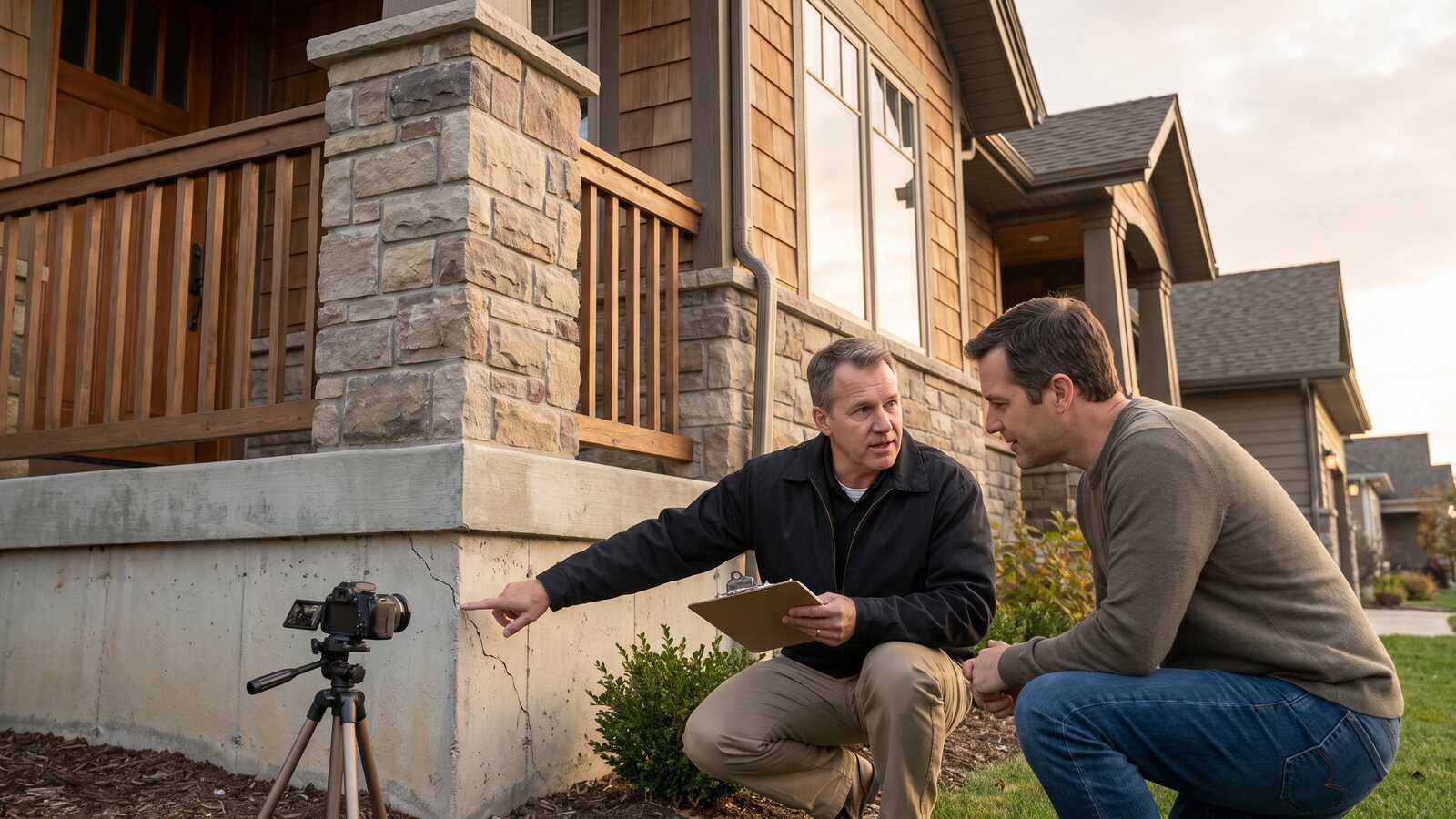
Bucket one is active failure. A crack that was hairline last year is now wide enough to slide a coin into. An interior door suddenly won't latch. A basement wall has started bowing inward and the homeowner can see it from across the room. Something changed recently enough that the homeowner noticed it, and once they notice, they move fast — not "call today" fast like a burst pipe, but "get someone out this week" fast, because they're scared the house is failing under them.
Bucket two is the legacy crack. Every older house has settled a little. The stair-step crack in the block foundation has been there for a decade. The floor has a barely perceptible slope. Nobody has done anything about it because nothing forced the issue — until a home sale inspection flags it, a mortgage lender requires an engineer's letter, or an insurance renewal comes back with a structural exclusion. These homeowners aren't scared. They're triggered by an external deadline, and they'll take weeks comparing quotes because the fix — helical or push pier underpinning — is a serious enough expense that they want to understand it first.
These two buckets need different lead sources, different follow-up, and different math. The most common mistake in foundation repair marketing is running one playbook for both: buying search-based leads for everything, then wondering why the bigger underpinning jobs never show up in the pipeline. Search is where active failure lives, because that homeowner is already typing "foundation crack repair near me" into Google. The legacy-crack homeowner is quietly tolerating the problem long before any search happens. Reaching that second group earlier is exactly what exclusive foundation repair lead generation is built to do.
Trust matters more here than in almost any other trade. A foundation is the one system a homeowner can't easily verify themselves, and a bad repair (or a company that vanishes mid-job) can mean real structural risk, not just an inconvenience. That trust barrier means license visibility, a structural engineer's stamp when required, warranty terms, and before/after documentation carry outsized weight in your marketing. A landing page or ad that can't answer "will this actually hold" in the first ten seconds is losing the legacy-crack homeowner before the phone ever rings.
What Do Foundation Repair Leads Cost in 2026?
Here's what the major sources actually deliver. Costs vary by market and are typically higher than trades like plumbing or painting because the average ticket is bigger and competition for foundation-specific traffic is thinner. These ranges hold across most US metros in 2026:
| Source | Cost per lead | Exclusive? | Typical close rate |
|---|---|---|---|
| Angi / HomeAdvisor | $30–$100 | No — shared with 3–5 companies | 5–12% |
| Thumbtack | $20–$85 per contact | No | 8–15% |
| Google Ads (search) | $120–$280 per lead after click costs | Yes, but you pay for every click | 15–25% |
| Google Local Services Ads | $35–$110 | Mostly — rotates among qualified pros | 20–35% |
| Exclusive Meta leads | $55–$130 | Yes — one foundation company only | 20–38% |
The column that matters is the last one. A $35 lead that closes 8% of the time costs you $437 per job. A $90 lead that closes 30% of the time costs you $300 per job, and it didn't burn a week racing four competitors for the same inspection appointment. Cost per lead is a vanity metric. Cost per acquired job is the number that decides whether your marketing works.
Why Do Shared Leads Fail Foundation Contractors on the Active-Failure Side?
Shared leads are a bad deal in most trades. For active-failure foundation calls they're especially wasteful, because fear accelerates the race the same way a safety issue does for other trades.
When a shared platform sells a "my wall is bowing" lead to five foundation companies, all five phones ring within minutes of each other. The homeowner books whoever calls back first and can get an inspector out soonest, because they're worried about their house. If your team is on a job, driving between appointments, or slow to return a missed call, your $60 didn't buy a lead. It bought the privilege of losing a race you never saw coming.
Run the numbers. Ten shared leads at $65 is $650. At a typical 10% shared-lead close rate, that's one job. If that job is a modest $1,200 crack-injection repair, you paid $650 in marketing to collect $1,200 in revenue, before labor, materials, and the sales visit itself. The math only works if the one job you land happens to be a bigger underpinning project, which turns your marketing into a lottery ticket instead of a system.
- Same lead sold to 3–5 competitors
- Win rate depends on answering in minutes
- Homeowner never heard of your company
- Price-shopped by default
- 5–12% close rate
- No control over lead volume or quality
- Disputes and junk leads eat your margin
- Every lead goes to you alone
- Your brand, license, and warranty on every ad
- Homeowner chose your company specifically
- Follow-up sequence works on your timeline
- 20–38% close rate
- Volume scales with your inspection capacity
- Predictable cost per booked job
The full breakdown of this math is in our guide to exclusive vs. shared leads, but the short version: exclusivity is the single biggest lever on your cost per job, because it's the difference between competing on speed against four other foundation companies and being the only inspector the homeowner is talking to.
How Do You Win More Active-Failure Foundation Calls?
You can't create new cracks, and you can't reach these homeowners before the moment they notice the problem. Once they notice, they search. So the active-failure game is about owning that moment of search in your service area:
- Google Local Services Ads. LSA sits above organic results, charges per lead instead of per click, and displays your review score and Google Guaranteed badge — which matters more for foundation work than for most trades, since homeowners are trusting you with the literal structure of their house. Get Google Guaranteed status, keep your service area accurate, and answer fast, since response rate affects how often you're shown.
- Your Google Business Profile. The map pack still takes a large share of active-failure calls. Review volume and recency drive your position in it, and photos of completed pier installs and crack repairs do more selling than any ad copy. If you're not systematically collecting reviews after every job, start there before spending another dollar on leads — here's the full playbook for your Google Business Profile.
- A phone that always gets answered. An unanswered active-failure call is an inspection your competitor booked. If your answer rate during business hours is below 90%, fixing that is cheaper than any lead source you will ever buy.
Notice what's not on the list: shared lead platforms. For active-failure calls they stack the worst mechanics — speed races and price shopping — onto the moment a homeowner is most worried about their home.
Does Rainy Season Change How You Should Market Foundation Repair?
Heavy rain and freeze-thaw cycles don't create foundation problems overnight, but they surface existing ones fast, and they expose the difference between foundation companies that were ready and companies that weren't. A wet spring or a hard freeze-thaw winter can turn a slow quarter into your busiest one.
When saturated soil expands and contracts around a foundation, hairline cracks that sat quietly for years suddenly let water in, walls that were stable start showing new lateral movement, and basements that never flooded start taking on water at the base of the wall. These homeowners are jumping straight from "I never thought about this" to actively researching companies, often within the same week. This is the active-failure bucket at its most extreme, and shared lead platforms are at their worst during these windows, selling the same seasonal panic to five other companies at once.
Three things separate foundation contractors who capture seasonal surge from ones who miss it:
- Staff ahead of the season, not after it. If your region has a predictable wet season or freeze-thaw window, add inspection capacity before it hits, not after your calendar is already backed up two weeks.
- Triage by severity. Active water intrusion and visibly worsening cracks should jump the queue ahead of routine settling questions.
- Convert seasonal calls into full-scope conversations. A homeowner who called about one wet basement corner often has a related drainage or grading issue worth quoting alongside the structural fix, if you ask before you leave the driveway.
That last point is the real opportunity. Wet-season demand spikes fastest for exactly the homeowners your competitors are reacting to, not marketing to. A foundation contractor who keeps Meta campaigns for underpinning and drainage running year-round, not just after a rainy week makes the local news, is positioned to convert that spike instead of just answering the phone more.
How Do You Generate Legacy-Crack Leads Before Your Competitors Know They Exist?
The bigger tickets — helical or push pier underpinning, wall stabilization, full perimeter work — mostly don't start with a search. They start with a homeowner tolerating a problem: a crack they've watched for years, a door that sticks a little more every summer, a home inspector's note from a sale three years ago that never got addressed. Eventually a trigger event forces the issue — a sale, a refinance, an insurance renewal — and by then every foundation company in the metro is bidding on the same click.
The cheaper move is to reach them during the tolerating phase. That's what Meta advertising does well: it puts a specific, concrete offer in front of homeowners who match the profile — older housing stock, homes on clay or expansive soil, houses listed for sale in the last 12 months — before they're in anyone's funnel.
What works in foundation repair creative on Meta in 2026:
- Symptom-specific hooks. "Doors that stick in summer and swing free in winter usually mean foundation movement, not a bad door." Specific and true, and it makes the homeowner think about the door they've been blaming on humidity for three years.
- Home-sale targeting. "Selling this year? A foundation inspection now avoids a surprise during the buyer's inspection." A concrete trigger event most foundation companies never advertise against directly.
- Real pricing with honest framing. "Helical pier underpinning from $1,300 per pier installed." A real starting number filters price-shoppers and pre-sells the estimate. Never advertise a flat total price you can't honor, since final pricing depends on pier count and soil conditions.
- Financing math. A $22,000 underpinning job is a hard no for most families as a lump sum. "From $310/month" turns it into a decision instead of a shock.
- Warranty and engineering proof. A transferable warranty and, where used, a licensed engineer's evaluation do more to move a skeptical legacy-crack homeowner than any discount.
- Fast, simple forms. Ask for the problem, the zip, and contact info. Every extra field costs you leads.
Because these homeowners weren't searching yet, the leads are exclusive by nature. Nobody else knows they exist. That's the structural advantage of demand creation over demand capture: you're not outbidding anyone for the click.
Want Exclusive Foundation Repair Leads?
Minyona generates exclusive, qualified foundation repair leads through Meta advertising — run through your own ad account, under your brand, sold to you and nobody else. You pay for qualified leads, not promises.
See How Foundation Repair Leads WorkWhat Should Foundation Repair Lead Follow-Up Look Like?
Most foundation contractors don't have a lead problem. They have a follow-up problem wearing a lead problem's clothes.
For active-failure calls, follow-up means answering fast and getting an inspector out within a day or two — the homeowner is worried, and the first company to show up calm and competent usually wins regardless of price. For legacy-crack leads, it means a real sequence: call within five minutes of the form submission, text if they don't pick up, and keep a structured cadence of calls, texts, and emails going for 30 days. These bigger jobs stall constantly, because they require a spouse conversation and a second look at the budget. The company still following up politely in week three wins jobs from competitors who gave up on day two.
We've published the exact playbooks for both pieces: why the first five minutes matter more than your price, and the full 30-day follow-up system with day-by-day scripts. If you buy leads and don't run something like this, you are funding your competitors' pipelines.
For underpinning jobs specifically, the follow-up needs to answer questions the homeowner didn't ask out loud: how many piers does a typical job like theirs need, does the price include an engineer's letter for a future sale, how long is the warranty and is it transferable, and will landscaping or a walkway need to be disturbed during install. Answering those before they're asked, in a text or a quick call two days after the initial inspection, closes more $10,000-plus jobs than any discount ever will.
How Many Leads Do You Need to Add $350K This Year?
Work it backward. Say your average ticket is $6,500 — a blend of crack injections, drainage add-ons, and helical or push pier underpinning jobs that typically run $10,000 to $30,000 for a full section of foundation.
$350,000 ÷ $6,500 average ticket = 54 jobs. At a 28% close rate on exclusive leads, that's about 193 leads for the year, or roughly 16 per month. At $90 per lead, you'd spend about $1,440/month — under 5% of the new revenue it produces. That's healthy. Run the same math on shared leads at a 10% close rate and you need over 540 leads and roughly triple the spend, plus the staff to race for every one of them.
Your numbers will differ — plug in your own average ticket and close rate. The point is that lead generation stops feeling like gambling the moment you know how many leads a month your revenue goal actually requires. If you don't know your close rate, start tracking it this week; it's the one number that changes every other decision.
The Bottom Line
Getting foundation repair leads in 2026 comes down to five moves:
- Split your strategy in two. Active failure and legacy cracks are different games with different economics. Fund both deliberately.
- Own the active-failure moment with Local Services Ads, a strong Google Business Profile, review volume, and a phone that always gets answered.
- Create legacy-crack demand with Meta advertising that reaches homeowners while they're still tolerating the problem — the sticking door, the hairline crack — before a sale or insurance letter forces a rushed decision.
- Refuse to race. Shared leads make you one of five foundation companies dialing the same number. Exclusive leads make you the only inspector in the conversation. The close rates say everything.
- Follow up like it's your job, because it is. Fast response on every lead, 30-day sequence on every legacy-crack estimate.
None of this requires being the biggest foundation company in your market. It requires being deliberate while your competitors buy whatever leads are easiest and complain about quality. That gap is the opportunity.
Stop Racing Four Other Foundation Companies to the Inspection
Minyona builds exclusive foundation repair lead pipelines through Meta advertising — your brand, your ad account, leads that go to you alone. No long contracts. You pay for qualified leads.
Get Started