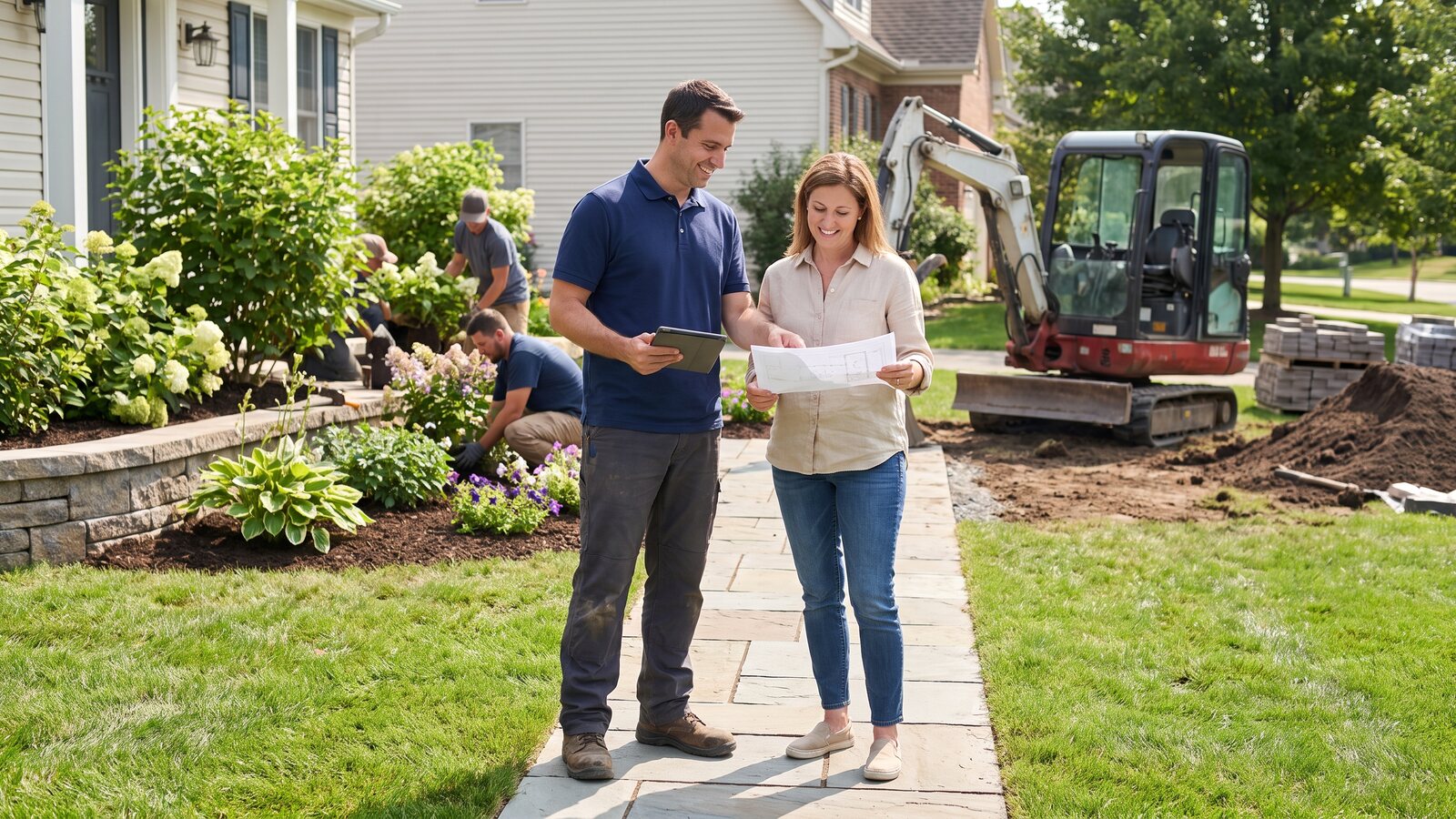
What Makes Landscaping Lead Generation Different From Other Home Service Trades?
Roofers and plumbers sell one kind of job, more or less. Landscaping companies run two businesses under one name, and the two barely resemble each other.
Bucket one is design/build. A homeowner wants a new patio, a retaining wall, a full front-yard renovation, a drainage fix, or a backyard built around an outdoor kitchen. It's a considered purchase — they compare quotes, look at portfolio photos, and think about it for days or weeks before signing. Tickets commonly run $8,000 to $40,000-plus depending on scope, closer to how a kitchen remodel or a foundation repair gets sold than to a home service emergency.
Bucket two is recurring maintenance. Mowing, edging, mulching, seasonal cleanup, irrigation checks. The individual ticket is small — often $150 to $500 per visit — but it's recurring revenue that fills a route and pays overhead every week of the season. This homeowner decides fast, cares about reliability and price, and rarely wants a sales conversation. They want a text confirming Tuesday.
These two buckets need different lead sources, different follow-up, and different math. The most common mistake in landscaping marketing is running one playbook for both: buying whatever leads are cheapest, dumping them into one pipeline, and wondering why the big design/build jobs never show up and the maintenance route never fills either. Reaching design/build homeowners while they're still in the planning phase, before every landscaper in the metro is bidding on the same job, is exactly what exclusive landscaping lead generation is built to do.
Trust plays a role here too, though differently than in a trade like foundation repair. A homeowner spending $25,000 on a backyard wants to see real finished projects, not stock photography, and wants confidence the crew that starts the job is the crew that finishes it. Portfolio depth, before/after photos, and reviews that mention specific projects carry more weight in landscaping ads than almost any other line of copy you can write.
What Do Landscaping Leads Cost in 2026?
Here's what the major sources actually deliver. Costs run lower than trades like foundation repair or roofing because ticket sizes span a wider range and competition for landscaping-specific traffic is heavier in most metros. These ranges hold across most US markets in 2026:
| Source | Cost per lead | Exclusive? | Typical close rate |
|---|---|---|---|
| Angi / HomeAdvisor | $15–$60 | No — shared with 3–5 companies | 5–12% |
| Thumbtack | $10–$50 per contact | No | 8–15% |
| Google Ads (search) | $50–$140 per lead after click costs | Yes, but you pay for every click | 15–25% |
| Google Local Services Ads | $20–$65 | Mostly — rotates among qualified pros | 20–35% |
| Exclusive Meta leads | $35–$90 | Yes — one landscaping company only | 20–38% |
The column that matters is the last one. A $20 lead that closes 8% of the time costs you $250 per job. A $55 design/build lead that closes 28% of the time costs you $196 per job, and it didn't burn a week racing four other landscapers for the same estimate appointment. Cost per lead is a vanity metric. Cost per acquired job is the number that decides whether your marketing works.
Why Do Shared Leads Fail Landscaping Contractors on Design/Build Projects?
Shared leads are a bad deal in most trades. For design/build landscaping jobs they're especially wasteful, because the homeowner is going to shop around regardless — shared platforms just make sure five companies are shopping the same lead at the same time instead of one.
When a shared platform sells a "backyard renovation" lead to five landscaping companies, all five reach out within the same day, all five quote roughly the same scope, and the homeowner picks whoever showed up with the best portfolio or the lowest number. Your crew did a full design consultation and a detailed quote for a job you had a one-in-five shot at from the moment the lead landed.
Run the numbers. Ten shared design/build leads at $45 is $450. At a typical 10% shared-lead close rate, that's one job. If that job is a modest $6,000 patio, you paid $450 in marketing to collect $6,000 in revenue, before labor, materials, and the design time already sunk into the four quotes you lost. The math only holds up because the average ticket is large enough to absorb the waste — it doesn't mean the waste isn't there.
- Same lead sold to 3–5 competitors
- Win rate depends on being cheapest or fastest
- Homeowner never heard of your company
- Design time spent on jobs you don't win
- 5–12% close rate
- No control over lead volume or quality
- Off-season the leads dry up entirely
- Every lead goes to you alone
- Your brand and portfolio on every ad
- Homeowner chose your company specifically
- Design consultations convert instead of getting shopped
- 20–38% close rate
- Volume scales with your crew capacity
- Predictable cost per booked job, in season and out
The full breakdown of this math is in our guide to exclusive vs. shared leads, but the short version: exclusivity is the single biggest lever on your cost per job, because it's the difference between competing on price against four other landscaping companies and being the only bid the homeowner is actually considering.
How Should You Split Marketing Between Design/Build and Recurring Maintenance?
Both sides of the business matter, but they need different budgets, different creative, and different sources. A simple framework for splitting spend:
- Fund maintenance with local search intent. Homeowners looking for a mowing or cleanup crew are typing "landscaping near me" or checking the map pack. Google Local Services Ads and a strong Google Business Profile capture this cheaply and reliably — it's low-consideration, high-frequency demand.
- Fund design/build with Meta advertising. Big projects rarely start with a search. They start with a homeowner scrolling and seeing a backyard transformation that looks like theirs could look. Portfolio-driven creative on Meta reaches these homeowners during the planning phase, before they've searched for anyone.
- Route maintenance customers into design/build conversations. Your existing mowing route is a warm audience for bigger projects — a crew that's already on-site every week is best positioned to notice a client's overgrown bed or aging patio and suggest an upgrade quote.
- Don't let one starve the other. A slow design/build month can tempt a company to redirect all spend to cheap maintenance leads, and vice versa in spring. Keep both funded year-round so neither pipeline goes cold when you need it.
Companies that try to run one generic "landscaping leads" campaign for both usually end up with mediocre results on each side, since the creative, targeting, and offer that wins a $300 mowing contract looks nothing like the creative that wins a $30,000 backyard build.
Want Exclusive Landscaping Leads?
Minyona generates exclusive, qualified landscaping leads through Meta advertising — run through your own ad account, under your brand, sold to you and nobody else. You pay for qualified leads, not promises.
See How Landscaping Leads WorkHow Does Seasonality Change Landscaping Marketing?
Landscaping is the most seasonal trade most contractors will ever market. In much of the country, demand for both design/build and maintenance compresses into a window that starts ramping in late winter and peaks hard by early summer, then tapers through fall cleanup season before going quiet in winter (or shifting to snow work in colder climates).
That compression changes the marketing calendar entirely. The homeowner who books a spring patio project usually starts researching in January or February — well before the ground has thawed — because they want the work done before summer barbecues and pool season. A landscaping company that waits until March to start advertising design/build has already missed the homeowners who locked in a contractor two months earlier.
Three moves separate landscaping companies that capture the seasonal surge from ones that scramble through it:
- Start design/build campaigns in the off-season. Running Meta ads through winter, while competitors are dark, means you're the only company in front of homeowners already dreaming about spring projects.
- Lock in maintenance contracts before the rush. Offering early-signup pricing or a locked spring start date in February fills your route before the phone starts ringing off the hook in April.
- Staff and quote ahead of demand, not during it. By the time your calendar is visibly backed up, you've already lost homeowners to a competitor who could start sooner.
Seasonality isn't unique to landscaping, but few trades feel it this hard. The full playbook for adjusting spend and creative by season is in our guide to seasonal contractor marketing.
What Should Landscaping Lead Follow-Up Look Like?
Most landscaping companies don't have a lead problem. They have a follow-up problem wearing a lead problem's clothes.
For maintenance leads, follow-up means a quick call or text confirming service days and pricing — these homeowners decide fast and move to the next company on their list if you're slow. For design/build leads, it means a real sequence: call within five minutes of the form submission, text if they don't pick up, and keep a structured cadence of calls, texts, and emails going for two to three weeks. Bigger projects stall constantly, because they require a budget conversation and sometimes a second look at the design. The company still following up politely in week two wins jobs from competitors who gave up after one voicemail.
The exact playbook for the first response is in our guide to why the first five minutes matter more than your price. If you buy leads and don't run something like this, you are funding your competitors' pipelines — a homeowner who couldn't reach you calls the next name on their list, and that name is rarely far away.
For design/build leads specifically, follow-up should answer questions the homeowner didn't ask out loud: does the quote include a 3D rendering or design sketch, what's the realistic install timeline given the season, is there a payment schedule tied to project milestones, and what happens if weather delays the work. Answering those before they're asked closes more $10,000-plus projects than any discount ever will.
How Many Leads Do You Need to Add $400K This Year?
Work it backward. Say your average ticket is $9,000 — a blend of patios, planting projects, and mid-size hardscape work that typically runs $8,000 to $25,000 for a full backyard renovation.
$400,000 ÷ $9,000 average ticket = 44 jobs. At a 25% close rate on exclusive leads, that's about 178 leads for the year, or roughly 15 per month. At $60 per lead, you'd spend about $900/month — under 3% of the new revenue it produces. That's healthy. Run the same math on shared leads at a 10% close rate and you need over 440 leads and roughly triple the spend, plus the design time burned quoting jobs you don't win.
Your numbers will differ — plug in your own average ticket and close rate, and run maintenance revenue through the same formula separately since the ticket size and close rate are nothing alike. The point is that lead generation stops feeling like gambling the moment you know how many leads a month each side of your business actually requires. If you don't know your close rate, start tracking it this week; it's the one number that changes every other decision.
The Bottom Line
Getting landscaping leads in 2026 comes down to five moves:
- Split your strategy in two. Design/build and recurring maintenance are different games with different economics. Fund both deliberately.
- Own local search for maintenance with Local Services Ads, a strong Google Business Profile, review volume, and a phone that always gets answered.
- Create design/build demand with Meta advertising that reaches homeowners while they're still in the planning phase — ideally starting in the off-season, before the spring rush.
- Refuse to race. Shared leads make you one of five landscaping companies quoting the same job. Exclusive leads make you the only bid the homeowner is considering. The close rates say everything.
- Follow up like it's your job, because it is. Fast response on every lead, a multi-week sequence on every design/build estimate.
None of this requires being the biggest landscaping company in your market. It requires being deliberate while your competitors buy whatever leads are easiest and complain about quality every spring. That gap is the opportunity.
Stop Racing Four Other Landscaping Companies to the Same Quote
Minyona builds exclusive landscaping lead pipelines through Meta advertising — your brand, your ad account, leads that go to you alone. No long contracts. You pay for qualified leads.
Get StartedFrequently Asked Questions
How much do landscaping leads cost in 2026?
Shared platform leads (Angi, HomeAdvisor) run $15-60 but are sold to 3-5 landscaping companies at once. Thumbtack contacts cost $10-50. Google Local Services Ads run $20-65 per lead. Exclusive Meta-generated leads run $35-90 and go to one landscaping company only. The better metric is cost per acquired job: a $55 exclusive design/build lead closing at 28% costs about $196 per job, while a $20 shared lead closing at 8% costs about $250 per job.
Are shared landscaping leads worth it?
Rarely, especially for design/build projects. A shared design/build lead gets quoted by 3-5 landscaping companies at once, so the homeowner shops price and portfolio across all of them before deciding. Typical shared-lead close rates are 5-12%, so most of the design time you spend quoting produces nothing. Exclusive leads close at 20-38% because you are the only company in the conversation.
What is the best way to get more landscaping maintenance clients?
Own local search intent: run Google Local Services Ads (pay-per-lead, shown above organic results, with a Google Guaranteed badge), build review volume and recency to hold a map-pack position with your Google Business Profile, and make sure your phone is answered every time. Maintenance homeowners decide fast and move to the next name on the list if you're slow to respond.
How do landscaping companies get bigger design/build projects instead of just mowing contracts?
Reach homeowners before they search. Big design/build projects start with a homeowner in the planning phase, often months before they contact anyone, especially in late winter ahead of a spring install. Meta advertising with portfolio-driven creative reaching homeowners during that planning window, ideally starting in the off-season, captures these projects before every landscaper in the metro is bidding on the same job.
How many leads does a landscaping company need to add $400,000 in revenue?
At a $9,000 average ticket blending patios, planting, and mid-size hardscape projects, $400,000 requires 44 jobs. At a 25% close rate on exclusive leads that is about 178 leads per year, or roughly 15 per month. At $60 per lead, that is about $900 per month in lead spend, under 3% of the new revenue it produces. Plug in your own average ticket and close rate to get your number, and run maintenance revenue through the same formula separately.