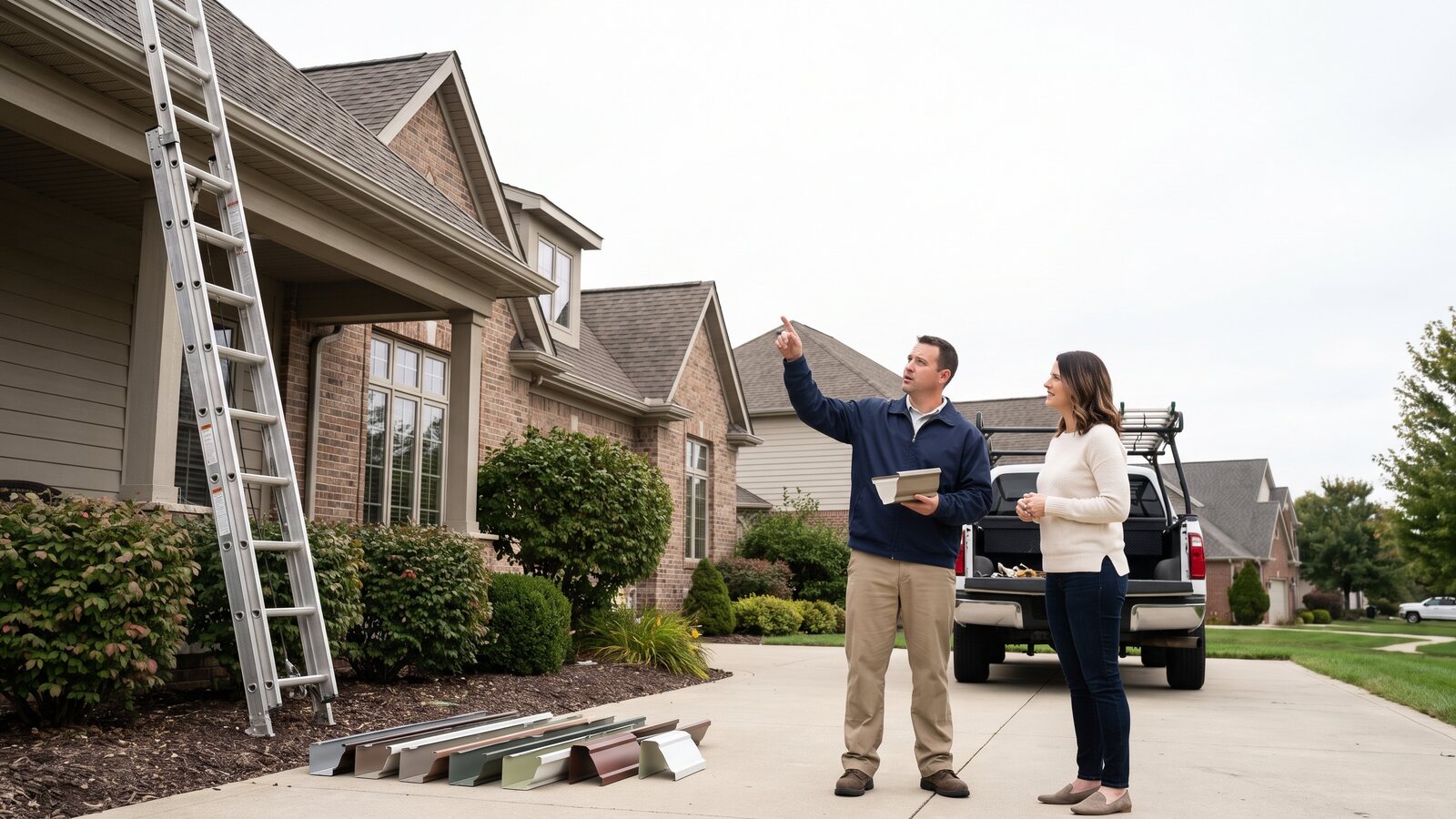
What Makes Gutter Lead Generation Different From Other Trades?
Gutters run three separate businesses under one crew, and most companies market them as if they were one. A full seamless-gutter replacement is a planned exterior purchase with real material and warranty decisions behind it. A gutter guard add-on sells alongside that replacement or on its own to homeowners tired of cleaning leaves out twice a year. A repair or cleaning call is a maintenance decision homeowners want handled this week. Treat all three the same way in your marketing and you end up mediocre at all three.
Bucket one is full replacement. Seamless aluminum gutters, the standard install for most homes, run $6 to $12 per linear foot installed. An average 150 to 200 linear foot home lands at roughly $1,200 to $2,400 for a full tear-off and replacement. Steel runs a bit higher at $8 to $16 per foot. Copper is the premium tier at $25 to $40 per foot, and larger homes, multi-story properties, or homes with extensive roofline detail regularly push total jobs past $5,000. Homeowners planning a full replacement compare materials, ask about warranty coverage, and often collect two or three quotes before signing. This is a considered exterior purchase, closer to a siding or roofing job than a quick repair call.
Bucket two is gutter guards. Screen and foam inserts run $4 to $10 per linear foot, or roughly $600 to $2,000 for an average home. Micro-mesh systems, the premium option that actually keeps out pine needles and small debris, run $10 to $20 per foot, or $1,500 to $4,000. Guards get sold two ways: bundled into a full replacement quote as an upsell, or pitched standalone to homeowners with existing gutters who are done climbing a ladder every fall.
Bucket three is repair and cleaning. A standard cleaning runs $100 to $300 depending on home size and stories. Spot repairs — resealing a leaking joint, reattaching a sagging section, patching a small hole — run $150 to $600. Downspout repair or replacement runs $100 to $400. These homeowners move fast. Water pouring down the siding, a section torn loose in a storm, or a gutter so clogged it's overflowing onto the foundation is a problem they want solved this week, and they'll book with whoever calls back first far more often than whoever quotes lowest.
All three buckets get hurt by the same mistake: one generic "gutter leads" campaign trying to sell a $2,000 full replacement and a $150 cleaning with the same ad, the same offer, and the same follow-up process. The creative that gets a homeowner to request a quote on a full replacement looks nothing like the creative that gets a homeowner to book a same-week repair. Building exclusive gutter contractor leads that separate these buyer types is what keeps your highest-margin replacement and guard pipeline from getting diluted by cheaper, faster repair traffic.
Warranty adds a layer most repair-focused trades don't deal with. A homeowner comparing a $1,500 replacement against a $2,200 replacement is often really comparing a 10-year workmanship warranty against a 20-year one, and contractors who explain that tradeoff clearly close more full-replacement bids than contractors who just quote a per-foot number.
What Do Gutter Leads Cost in 2026?
Here's what the major sources actually deliver. Cost per lead looks attractive on shared platforms, but the wrong source can waste a lot of estimating time on bids you were never going to win. These ranges hold across most US markets in 2026:
| Source | Cost per lead | Exclusive? | Typical close rate |
|---|---|---|---|
| Angi / HomeAdvisor | $20–$70 | No — shared with 3–5 companies | 5–10% |
| Thumbtack | $15–$55 per contact | No | 6–12% |
| Houzz Pro | $30–$90 | No — shared among responding pros | 6–12% |
| Google Ads (search) | $60–$220 per lead after click costs | Yes, but you pay for every click | 12–20% |
| Exclusive Meta leads | $50–$200 | Yes — one gutter contractor only | 20–35% |
The column that matters is the last one. A $40 Angi lead that closes 6% of the time costs you roughly $667 per job before a single ladder goes up. A $100 exclusive lead that closes 25% of the time costs $400 per job, and it didn't put you in a bidding war against four other gutter companies quoting the same roofline. Cost per lead is a vanity metric. Cost per acquired job is the number that decides whether your marketing actually grows the business.
Why Do Homeowners Get Multiple Quotes Before a Full Gutter Replacement?
At $1,200 to $5,000-plus for a full replacement, getting two or three quotes isn't unusual caution — it's standard practice, the same way most homeowners shop more than one contractor for a roof or a set of new windows. Gutter contractors can't market their way out of the comparison process on full replacements. What they can control is whether they're the contractor the homeowner already trusts before the quotes even go out, versus one of three interchangeable names pulled from a search results page.
The contractors who consistently win the bid — not just get invited to it — share three things. First, a portfolio of real, recent, local jobs showing clean seamless-gutter lines, not stock photography that could belong to any gutter company in the country. Second, visible proof of licensing, insurance, and a clear warranty in writing, since a leaking gutter that voids a warranty is exactly the outcome homeowners worry about after a bad experience with someone else. Third, a sales process that walks through material and guard tradeoffs — aluminum versus steel, screen versus micro-mesh — instead of racing straight to a per-foot number.
None of that shows up by accident. It shows up because the marketing that generated the lead already did some of that trust-building before the first phone call, which is exactly why exclusive versus shared lead economics matter so much more on full replacements than on a same-week repair call.
Why Do Shared Leads Hurt Gutter Contractors Especially Hard on Full Replacements?
Shared leads are a bad deal in most trades, but full gutter replacement is where they do real damage to your close rate. A homeowner planning a replacement is already comparing two or three companies on their own. Selling that same lead to three or four gutter contractors through a shared platform means you've handed them another quote for free — more competition, on top of the competition they were already going to generate themselves, for a project where a rushed price quote is exactly the wrong first impression.
Run the numbers. Ten shared full-replacement leads at $45 is $450. At a typical 8% shared-lead close rate on replacements, that's not even one full job across ten leads — call it roughly one job for every twelve or thirteen leads purchased. If that one job is a $1,800 replacement, the marketing spend looks small next to the revenue, but the estimating hours sunk into the several quotes you lost along the way are real, and they're hours your crew didn't spend on jobs you were actually going to win.
- Same lead sold to 3–5 competitors
- You're one of several quotes, not the first call
- Homeowner never saw your portfolio first
- Estimating time spent on jobs you don't win
- 5–10% close rate on full replacements
- No control over lead volume or quality
- Every quote turns into a price negotiation
- Every lead goes to you alone
- Your clean gutter lines on every ad
- Homeowner already trusts your brand
- Quotes convert instead of getting shopped
- 20–35% close rate on full replacements
- Volume scales with your crew capacity
- Predictable cost per booked project, season to season
The full breakdown of this math is in our guide to exclusive vs. shared leads, but the short version for gutter contractors: exclusivity doesn't just raise your close rate, it changes what kind of conversation you're having with the homeowner in the first place — warranty and trust, instead of just price per foot.
How Should You Split Marketing Between Replacement, Guards, and Repair Work?
All three segments matter, but they need different budgets, different creative, and different timing. A simple framework for splitting spend:
- Fund full replacement with Meta advertising built around clean, finished gutter-line photography. Homeowners planning a replacement rarely start with a search — they start by noticing their own gutters sagging or staining the siding after seeing someone else's clean install in a similar neighborhood. Reaching them during the planning phase, weeks before they request their first quote, is what gets you into the consideration set before the comparison process even starts.
- Bundle gutter guards into every replacement quote, and run a separate campaign for standalone guard installs. Guards are the easiest upsell in the trade on a fresh replacement, but homeowners with existing gutters who are simply tired of climbing a ladder every fall are a distinct buyer worth marketing to on their own.
- Fund repair and cleaning with local search intent and fast response. A homeowner with an overflowing gutter or a section torn loose is closer to a decision and searching with intent. Google Ads and a strong Google Business Profile capture this efficiently, and a quick callback wins jobs that a slow one loses to whoever answered first.
- Don't let repair volume crowd out replacement budget. Repair and cleaning leads are cheaper and convert faster, which tempts contractors to over-invest there. Full replacement is where the real margin lives, and it needs consistent, seasonally-timed visibility to keep the pipeline full for your highest-value work.
Contractors running one generic "gutter company" campaign for all three segments usually end up under-marketing full replacement, since repair and cleaning traffic is cheaper to generate and crowds out the budget that should be building your project portfolio in front of planning-stage homeowners.
Want Exclusive Gutter Contractor Leads?
Minyona generates exclusive, qualified gutter contractor leads through Meta advertising — run through your own ad account, under your brand, sold to you and nobody else. You pay for qualified leads, not promises.
See How Gutter Leads WorkHow Does Seasonality Change Gutter Contractor Marketing?
Gutter demand is sharply seasonal in most of the country, and it moves on two separate calendars. Cleaning and guard interest spikes in fall as leaves come down and homeowners get tired of climbing a ladder before the holidays. Full replacement and repair demand spikes in spring, right after the season's first heavy storms expose sagging sections, leaking joints, and water damage homeowners didn't know they had until the snow melted or the rain started. Contractors who wait until homeowners are already calling around are competing for a shrinking pool of buyers who wanted the work done a month ago.
Two moves separate contractors who capture this properly from ones who scramble every year:
- Start fall guard and cleaning campaigns in late summer, 6–8 weeks ahead of peak leaf-drop in your region. Homeowners start noticing clogged gutters the first time it rains hard after the leaves come down, and by then the contractors who market only in October are already competing for a booked-up calendar.
- Keep replacement and repair campaigns running year-round with a budget bump right after storm events. A gutter section torn loose or overflowing after a heavy storm is one of the fastest-moving buying decisions in the trade — an always-on local presence, boosted right after wind or heavy-rain events in your area, captures jobs that generic seasonal campaigns miss entirely.
The full playbook for adjusting spend and creative by season is in our guide to seasonal contractor marketing.
What Should Gutter Lead Follow-Up Look Like?
Most gutter contractors don't have a lead problem. They have a follow-up problem wearing a lead problem's clothes.
For full-replacement leads, speed determines whether you get the quote appointment at all. A homeowner who fills out two or three contractors' contact forms in the same afternoon tends to book with whoever calls back first and use that meeting as the anchor they compare everyone else against. For repair, cleaning, and guard leads, the math is even blunter — these buyers want the job scheduled now, and a slow callback almost always means the job goes to whoever answered the phone faster.
The exact playbook for the first response is in our guide to why the first five minutes matter more than your price. If you buy leads and don't run something like this, you're paying to generate business for whichever competitor answers the phone faster than you do.
How Many Leads Do You Need to Hit Your Revenue Goal?
Work it backward. Say your average ticket blending full replacement, guards, and repair work is $1,600.
$150,000 ÷ $1,600 average ticket = 94 jobs. At a 25% close rate on exclusive leads, that's about 375 leads for the year, or about 31 per month. At $110 per lead, you'd spend about $3,410/month, or roughly $40,920 for the year — about 27% of the new revenue it produces. Run the same math on shared leads at an 8% close rate and you need around 1,175 leads for the year, at a lower cost per lead but a far higher total volume and a lot more estimating hours to reach the same number of booked jobs.
Your numbers will differ — plug in your own average ticket and close rate, and run full replacement separately from repair and guard work since the ticket size and close rate for each are nothing alike. Gutters' lower average ticket compared to trades like roofing or siding means lead generation typically eats a larger share of new revenue — that's simply the economics of a lower-ticket trade, not a sign something's wrong. The point is that gutter lead generation stops feeling unpredictable the moment you know how many leads a month each segment of your business actually requires. If you don't track your close rate by segment today, start this week; it's the one number that changes every other decision you make about where to spend.
The Bottom Line
Gutter lead generation in 2026 comes down to five moves:
- Split your strategy by segment. Full replacement, gutter guards, and repair/cleaning are different sales, different timelines, and different economics. Fund all three deliberately.
- Win full replacement with trust, not price. Meta advertising built around real, clean gutter-line photography, reaching homeowners during the planning phase, is what gets you into the consideration set before the quote-comparison process even starts.
- Refuse to compete against yourself. Shared leads hand your best prospects to three or four other contractors at once, turning your highest-margin work into a price negotiation you didn't need to enter.
- Plan your seasons ahead of the rush. Fall drives guards and cleaning, spring drives replacement and repair — marketing has to start weeks before each surge, not once homeowners are already calling around.
- Follow up like the job depends on it, because it does. Fast response determines whether you're the anchor bid the homeowner compares everyone else against, or an afterthought that called back too late.
None of this requires being the biggest gutter company in your market. It requires being the contractor homeowners already trust before the quotes come in, while your competitors keep bidding the same roofline and wondering why they keep losing on price.
Stop Bidding Against Three Other Gutter Companies for the Same Roofline
Minyona builds exclusive gutter contractor lead pipelines through Meta advertising — your brand, your ad account, leads that go to you alone. No long contracts. You pay for qualified leads.
Get StartedFrequently Asked Questions
How much do gutter leads cost in 2026?
Shared platform leads (Angi, HomeAdvisor) run $20-70 but are sold to 3-5 gutter contractors at once. Thumbtack contacts cost $15-55. Houzz Pro leads run $30-90, also shared. Google Ads search leads cost $60-220 after click costs. Exclusive Meta-generated leads run $50-200 and go to one gutter contractor only. The better metric is cost per acquired job: a $100 exclusive lead closing at 25% costs about $400 per job, while a $40 shared lead closing at 6% costs about $667 per job.
Why do full gutter replacements need different marketing than repair and cleaning?
Full replacement is a considered purchase — homeowners compare materials, ask about warranty, and often collect two or three quotes before signing a $1,200 to $5,000-plus job. Repair and cleaning ($100 to $600) is a maintenance decision homeowners want handled this week, and they book with whoever answers first rather than shopping around. One generic campaign underserves the higher-margin replacement business while overpaying for repair traffic that would have converted anyway.
Are shared gutter leads worth it?
Rarely, especially for full replacements. A shared lead gets sold to 3-5 contractors at once, adding to the quotes the homeowner was already going to collect on their own. Typical shared-lead close rates run 5-10% on full replacements, so most of the estimating time spent quoting produces nothing. Exclusive leads close at 20-35% because you are the only contractor in the conversation.
When should gutter contractors start marketing for fall guard and cleaning season?
Start fall campaigns in late summer, 6-8 weeks ahead of peak leaf-drop in your region. Homeowners start noticing clogged gutters the first time it rains hard after leaves come down, and contractors who only market in October are competing for a calendar that's already booking up. Keep replacement and repair campaigns running year-round with a budget bump right after storm events, since a torn-loose section or an overflowing gutter is one of the fastest-moving buying decisions in the trade.
How many leads does a gutter contractor need to hit $150,000 in new revenue?
At a $1,600 average ticket blending full replacement, guards, and repair work, $150,000 requires 94 jobs. At a 25% close rate on exclusive leads that is about 375 leads per year, or about 31 per month. At $110 per lead, that is about $3,410 per month in lead spend, roughly 27% of the new revenue it produces. Plug in your own average ticket and close rate, and run full replacement separately from repair and guard work since the economics differ sharply.