What Makes Fence Contractor Lead Generation Different From Other Trades?
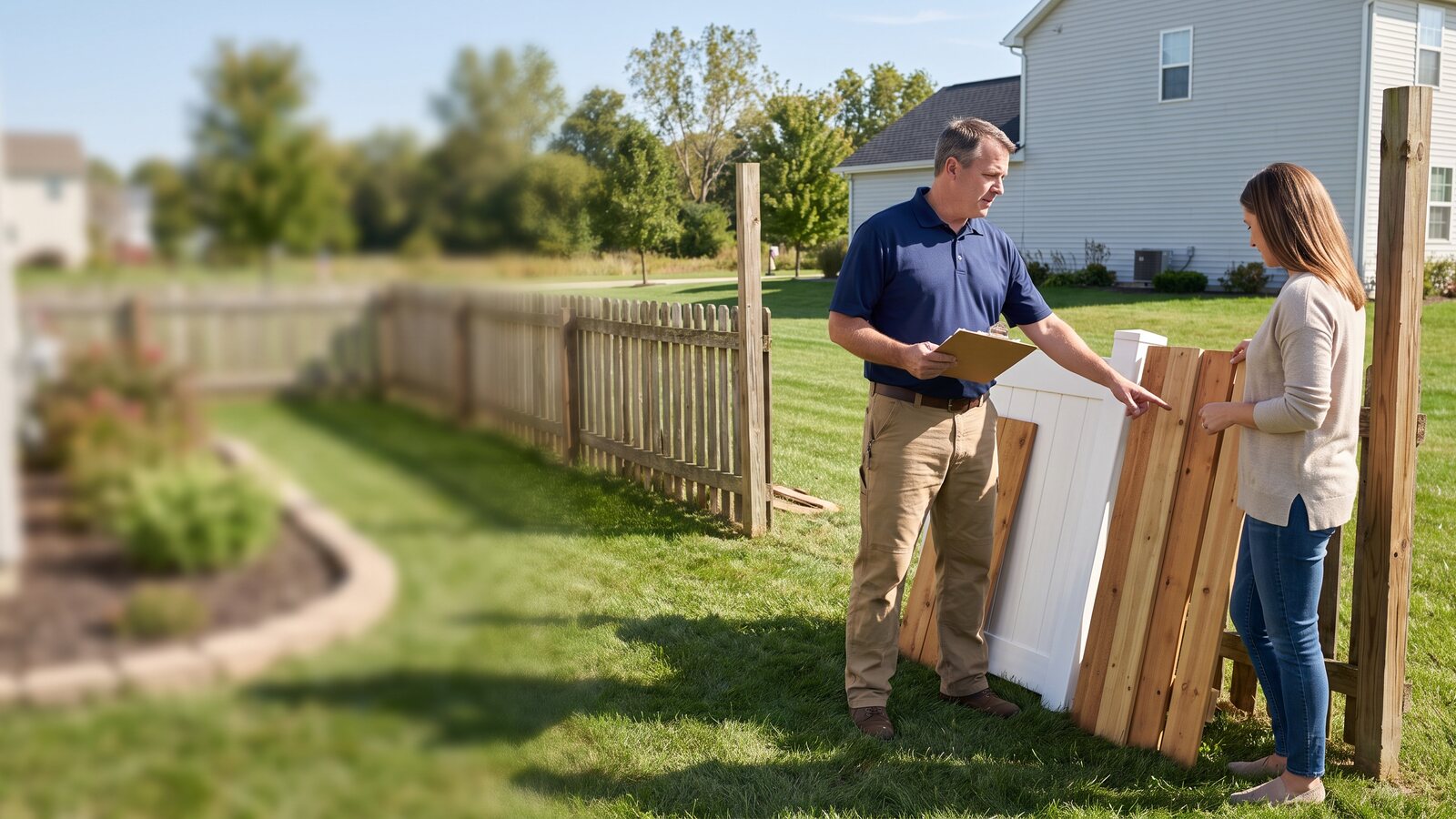
Fencing runs two separate businesses under one crew, and most companies market them as if they were one. A new fence installation is a planned purchase with real material and layout decisions behind it. A repair or gate job is a maintenance decision homeowners want handled this week. Treat both the same way in your marketing and you end up mediocre at both.
Bucket one is new fence installation. Chain link is the budget option: an average 150 to 200 linear foot yard runs $10 to $25 per foot installed, or roughly $1,500 to $5,000 total. Wood privacy fencing runs $20 to $45 per foot, putting the same footprint at $3,000 to $9,000. Vinyl runs $25 to $50 per foot, or $4,000 to $10,000 for an average yard. Ornamental aluminum or wrought iron is the premium tier at $30 to $75 per foot, and larger properties, pool enclosures, or acreage and farm fencing regularly push total jobs past $15,000. Homeowners planning an install like this compare materials, think through property lines and HOA rules, and often collect two or three quotes before signing. This is a considered exterior purchase, closer to a siding or roofing job than a quick repair call.
Bucket two is repair and gate work. Replacing a few damaged boards or panels runs $150 to $800. Gate repair or replacement — hinges, latches, sagging frames — runs $200 to $1,200. Storm damage, where a section is down or leaning after wind or a fallen limb, runs $500 to $3,000 depending on how much fence line needs rebuilding. These homeowners move fast. A fence that's down, a gate that won't latch, or a section a dog keeps escaping through is a problem they want solved this week, and they'll book with whoever calls back first far more often than whoever quotes lowest.
Both buckets get hurt by the same mistake: one generic "fence leads" campaign trying to sell a $9,000 privacy fence install and a $400 panel repair with the same ad, the same offer, and the same follow-up process. The creative that gets a homeowner to request a design consultation for a new backyard fence looks nothing like the creative that gets a homeowner to book a same-week gate repair. Building exclusive fence contractor leads that separate these two buyer types is what keeps your highest-margin installation pipeline from getting diluted by cheaper, faster repair traffic.
Material choice adds a layer most repair-focused trades don't deal with. A homeowner comparing wood against vinyl is really comparing upfront cost against 20-plus years with no repainting or staining, and contractors who explain that tradeoff clearly close more new-installation bids than contractors who just quote a per-foot number.
What Do Fence Contractor Leads Cost in 2026?
Here's what the major sources actually deliver. Cost per lead looks attractive on shared platforms, but the wrong source can waste a lot of estimating time on bids you were never going to win. These ranges hold across most US markets in 2026:
| Source | Cost per lead | Exclusive? | Typical close rate |
|---|---|---|---|
| Angi / HomeAdvisor | $20–$70 | No — shared with 3–5 companies | 5–10% |
| Thumbtack | $15–$60 per contact | No | 6–12% |
| Houzz Pro | $30–$90 | No — shared among responding pros | 6–12% |
| Google Ads (search) | $70–$250 per lead after click costs | Yes, but you pay for every click | 12–20% |
| Exclusive Meta leads | $50–$200 | Yes — one fence contractor only | 20–35% |
The column that matters is the last one. A $40 Angi lead that closes 6% of the time costs you roughly $667 per job before a single post gets set. A $100 exclusive lead that closes 25% of the time costs $400 per job, and it didn't put you in a bidding war against four other fence companies quoting the same property line. Cost per lead is a vanity metric. Cost per acquired job is the number that decides whether your marketing actually grows the business.
Why Do Homeowners Get Multiple Quotes Before Booking a New Fence?
At $3,000 to $15,000-plus for a new install, getting two or three quotes isn't unusual caution — it's standard practice, the same way most homeowners shop more than one contractor for a roof or a set of new windows. Fence contractors can't market their way out of the comparison process on new installations. What they can control is whether they're the contractor the homeowner already trusts before the quotes even go out, versus one of three interchangeable names pulled from a search results page.
The contractors who consistently win the bid — not just get invited to it — share three things. First, a portfolio of real, recent, local installs in the material and style the homeowner is picturing, not stock photography that could belong to any fence company in the country. Second, visible proof of licensing, insurance, and experience navigating property-line surveys and HOA approval, since a fence set on the wrong line is a dispute homeowners actively worry about. Third, a sales process that walks through material tradeoffs — wood versus vinyl versus aluminum, post spacing, gate placement — instead of racing straight to a per-foot number.
None of that shows up by accident. It shows up because the marketing that generated the lead already did some of that trust-building before the first phone call, which is exactly why exclusive versus shared lead economics matter so much more on new installations than on a same-week repair call.
Why Do Shared Leads Hurt Fence Contractors Especially Hard on New Installs?
Shared leads are a bad deal in most trades, but new fence installation is where they do real damage to your close rate. A homeowner planning an install is already comparing two or three companies on their own. Selling that same lead to three or four fence contractors through a shared platform means you've handed them another quote for free — more competition, on top of the competition they were already going to generate themselves, for a project where a rushed price quote is exactly the wrong first impression.
Run the numbers. Ten shared new-installation leads at $50 is $500. At a typical 8% shared-lead close rate on new installs, that's not even one full job across ten leads — call it roughly one job for every twelve or thirteen leads purchased. If that one job is a $7,000 install, the marketing spend looks small next to the revenue, but the estimating hours sunk into the several quotes you lost along the way are real, and they're hours your crew didn't spend on jobs you were actually going to win.
- Same lead sold to 3–5 competitors
- You're one of several quotes, not the first call
- Homeowner never saw your portfolio first
- Estimating time spent on jobs you don't win
- 5–10% close rate on new installations
- No control over lead volume or quality
- Every quote turns into a price negotiation
- Every lead goes to you alone
- Your finished fence lines on every ad
- Homeowner already trusts your brand
- Consultations convert instead of getting shopped
- 20–35% close rate on new installations
- Volume scales with your crew capacity
- Predictable cost per booked project, season to season
The full breakdown of this math is in our guide to exclusive vs. shared leads, but the short version for fence contractors: exclusivity doesn't just raise your close rate, it changes what kind of conversation you're having with the homeowner in the first place — design and trust, instead of just price per foot.
How Should You Split Marketing Between New Installs and Repair Work?
Both segments matter, but they need different budgets, different creative, and different timing. A simple framework for splitting spend:
- Fund new installation with Meta advertising built around finished fence-line photography. Homeowners planning a fence rarely start with a search — they start by picturing their own yard after seeing someone else's finished install in a similar neighborhood. Reaching them during the planning phase, weeks before they request their first quote, is what gets you into the consideration set before the comparison process even starts.
- Fund repair and gate work with local search intent and fast response. A homeowner with a downed section or a gate that won't latch is closer to a decision and searching with intent. Google Ads and a strong Google Business Profile capture this efficiently, and a quick callback wins jobs that a slow one loses to whoever answered first.
- Don't let repair volume crowd out new-installation budget. Repair leads are cheaper and convert faster, which tempts contractors to over-invest there. New installation is where the real margin lives, and it needs consistent, seasonally-timed visibility to keep the pipeline full for your highest-value work.
- Use repair jobs to build the portfolio that sells new installs. Every repair or gate job is a chance to shoot before-and-after photos in a real yard, which becomes ad creative that sells your next full install far better than stock photography ever will.
Contractors running one generic "fence company" campaign for both segments usually end up under-marketing new installation, since repair traffic is cheaper to generate and crowds out the budget that should be building your project portfolio in front of planning-stage homeowners.
Want Exclusive Fence Contractor Leads?
Minyona generates exclusive, qualified fence contractor leads through Meta advertising — run through your own ad account, under your brand, sold to you and nobody else. You pay for qualified leads, not promises.
See How Fence Contractor Leads WorkHow Does Seasonality Change Fence Contractor Marketing?
Fence installation demand is sharply seasonal in most of the country. Homeowners want a new fence in before they start using the backyard for the season, which means the planning and quoting window runs from late winter through early spring in most markets. Contractors who wait until May to start marketing are competing for a shrinking pool of homeowners who wanted their fence done a month ago.
Repair and gate work tracks the same calendar but compresses into a tighter window, with a second smaller spike after major storms. Two moves separate contractors who capture this properly from ones who scramble every year:
- Start new-installation campaigns in late winter, 6–10 weeks ahead of your local spring surge. Property line surveys, HOA approval, and crew scheduling mean a homeowner who wants a fence by May often needs to sign a contract by March. Contractors who only market once the weather turns warm are competing for homeowners who already booked someone else.
- Keep repair and gate campaigns running year-round with a budget bump after storm season. These buyers decide fast and shop harder on speed than price, so a always-on local presence, boosted right after wind or storm events in your area, captures jobs that generic seasonal campaigns miss entirely.
The full playbook for adjusting spend and creative by season is in our guide to seasonal contractor marketing.
What Should Fence Contractor Lead Follow-Up Look Like?
Most fence contractors don't have a lead problem. They have a follow-up problem wearing a lead problem's clothes.
For new-installation leads, speed determines whether you get the consultation at all. A homeowner who fills out two or three contractors' contact forms in the same afternoon tends to book with whoever calls back first and use that meeting as the anchor they compare everyone else against. For repair and gate leads, the math is even blunter — these buyers want the job scheduled now, and a slow callback almost always means the job goes to whoever answered the phone faster.
The exact playbook for the first response is in our guide to why the first five minutes matter more than your price. If you buy leads and don't run something like this, you're paying to generate business for whichever competitor answers the phone faster than you do.
How Many Leads Do You Need to Hit Your Revenue Goal?
Work it backward. Say your average ticket blending new installs and repair work is $5,000.
$250,000 ÷ $5,000 average ticket = 50 jobs. At a 25% close rate on exclusive leads, that's 200 leads for the year, or about 17 per month. At $110 per lead, you'd spend about $1,870/month, or roughly $22,440 for the year — about 9% of the new revenue it produces. Run the same math on shared leads at an 8% close rate and you need around 625 leads for the year, at a lower cost per lead but a far higher total volume and a lot more estimating hours to reach the same number of booked jobs.
Your numbers will differ — plug in your own average ticket and close rate, and run new installation separately from repair work since the ticket size and close rate for each are nothing alike. Fencing's lower average ticket compared to trades like decking or siding means lead generation typically eats a larger share of new revenue — that's simply the economics of a lower-ticket trade, not a sign something's wrong. The point is that fence lead generation stops feeling unpredictable the moment you know how many leads a month each side of your business actually requires. If you don't track your close rate by segment today, start this week; it's the one number that changes every other decision you make about where to spend.
The Bottom Line
Fence contractor lead generation in 2026 comes down to five moves:
- Split your strategy by segment. New installation and repair/gate work are different sales, different timelines, and different economics. Fund both deliberately.
- Win new installation with trust, not price. Meta advertising built around real finished fence lines, reaching homeowners during the planning phase, is what gets you into the consideration set before the quote-comparison process even starts.
- Refuse to compete against yourself. Shared leads hand your best prospects to three or four other contractors at once, turning your highest-margin work into a price negotiation you didn't need to enter.
- Plan your install season ahead of the rush. Fencing's spring surge means new-installation marketing has to start in late winter, not once the weather turns warm.
- Follow up like the job depends on it, because it does. Fast response determines whether you're the anchor bid the homeowner compares everyone else against, or an afterthought that called back too late.
None of this requires being the biggest fence company in your market. It requires being the contractor homeowners already trust before the quotes come in, while your competitors keep bidding the same property line and wondering why they keep losing on price.
Stop Bidding Against Three Other Fence Companies for the Same Property Line
Minyona builds exclusive fence contractor lead pipelines through Meta advertising — your brand, your ad account, leads that go to you alone. No long contracts. You pay for qualified leads.
Get StartedFrequently Asked Questions
How much do fence contractor leads cost in 2026?
Shared platform leads (Angi, HomeAdvisor) run $20-70 but are sold to 3-5 fence contractors at once. Thumbtack contacts cost $15-60. Houzz Pro leads run $30-90, also shared. Google Ads search leads cost $70-250 after click costs. Exclusive Meta-generated leads run $50-200 and go to one fence contractor only. The better metric is cost per acquired job: a $100 exclusive lead closing at 25% costs about $400 per job, while a $40 shared lead closing at 6% costs about $667 per job.
Why do new fence installs need different marketing than repair and gate work?
New installation is a considered purchase — homeowners compare materials, check property lines and HOA rules, and often collect two or three quotes before signing a $3,000 to $15,000-plus job. Repair and gate work ($150 to $3,000) is a maintenance decision homeowners want handled this week, and they book with whoever answers first rather than shopping around. One generic campaign underserves the higher-margin installation business while overpaying for repair traffic that would have converted anyway.
Are shared fence contractor leads worth it?
Rarely, especially for new installations. A shared lead gets sold to 3-5 contractors at once, adding to the quotes the homeowner was already going to collect on their own. Typical shared-lead close rates run 5-10% on new installs, so most of the estimating time spent quoting produces nothing. Exclusive leads close at 20-35% because you are the only contractor in the conversation.
When should fence contractors start marketing for the spring installation season?
Start new-installation campaigns in late winter, 6-10 weeks ahead of your local spring surge. Property line surveys, HOA approval, and crew scheduling mean a homeowner who wants a fence by May often needs to sign a contract by March. Contractors who only market once the weather warms up are competing for homeowners who already booked someone else. Keep repair and gate campaigns running year-round with a budget bump after storm events.
How many leads does a fence contractor need to hit $250,000 in new revenue?
At a $5,000 average ticket blending new installs and repair work, $250,000 requires 50 jobs. At a 25% close rate on exclusive leads that is 200 leads per year, or about 17 per month. At $110 per lead, that is about $1,870 per month in lead spend, roughly 9% of the new revenue it produces. Plug in your own average ticket and close rate, and run new installation separately from repair work since the economics differ sharply.